
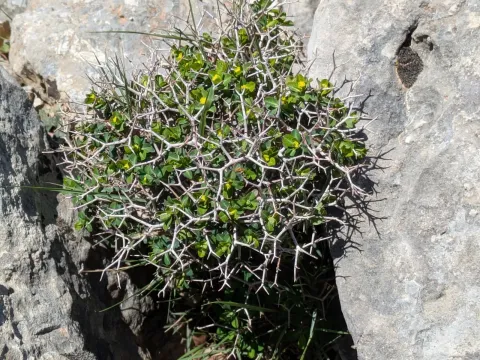
Spiny spurge
Euphorbia acanthothamnos
The spiny spurge (Euphorbia acanthothamnos) is a perennial succulent shrub belonging to the Euphorbiaceae family. It is distinctively characterized by its dense, cushion-like growth habit, which features thorny stems providing natural protection in its arid environment.
What the section contains
Spiny spurge
Native to the Eastern Mediterranean region, including Greece and western Turkey, this plant is naturally adapted to rugged, rocky landscapes. It typically thrives in limestone-based soils and open areas with high solar exposure.
Cultivation of this species requires full sunlight and exceptional soil drainage. Like many succulent species, it is highly intolerant of waterlogged conditions, which lead to rapid root decay; therefore, a gritty or rocky substrate is essential for healthy development.
This plant is highly valued for its extreme drought tolerance, making it an excellent candidate for xeriscaping and low-maintenance gardens. It is well-adapted to surviving in poor, rocky soils where water availability is consistently low throughout the growing season.
In terms of agricultural and horticultural utility, Euphorbia acanthothamnos is primarily used as an ornamental specimen in rock gardens. Its architecture provides a unique textural element that remains visually interesting year-round, despite the harsh environmental conditions.
The primary threats to the health of the spiny spurge are fungal pathogens triggered by high humidity or poor aeration. Root and stem rot are the most frequent causes of plant death in improper garden settings.
Common horticultural pests include spider mites and mealybugs, which may colonize the stems. Regular monitoring is necessary to catch infestations early, as the dense, thorny structure of the plant makes thorough treatment with topical pesticides challenging.