
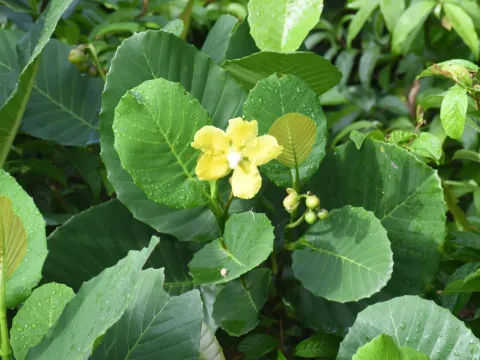
Dillenia
Dillenia
Dillenia is a genus of evergreen or deciduous trees and shrubs belonging to the Dilleniaceae family. The genus consists of approximately 60 species, with Dillenia indica being the most notable for its agricultural and culinary significance in tropical regions.
What the section contains


Dillenia
The native range of this crop spans across the tropical parts of South and Southeast Asia, including countries like India, Thailand, and Malaysia. These plants thrive in environments characterized by high humidity, abundant rainfall, and consistently warm temperatures throughout the year.
Successful cultivation requires tropical climate conditions where temperatures remain above 15-18 degrees Celsius. The plant is extremely frost-sensitive and will suffer irreparable damage if exposed to cold snaps, making it unsuitable for cultivation in temperate zones.
In terms of soil requirements, the crop prefers deep, fertile, and well-draining loamy soils. It is crucial to maintain moisture levels that support active growth while avoiding waterlogging, which can lead to rapid root decay and plant decline in poorly drained areas.
Agricultural practices involve regular maintenance such as periodic fertilization with organic or mineral compounds to sustain growth, alongside light pruning to manage the canopy density. Beyond fruit production, the aesthetic value of its large leaves and flowers is highly appreciated in horticulture.
The primary economic use is the harvesting of its fleshy fruits, which consist of thickened sepals. These are processed into jellies, jams, and sauces, and are also commonly used in traditional cuisines to add a tangy, acidic flavor to various local dishes.
The most common biological threats to the crop include various scale insects and mealybugs that target young foliage and stems. Furthermore, high humidity levels can promote fungal infections, requiring strategic spacing of trees to ensure proper air circulation and reduce disease pressure.