
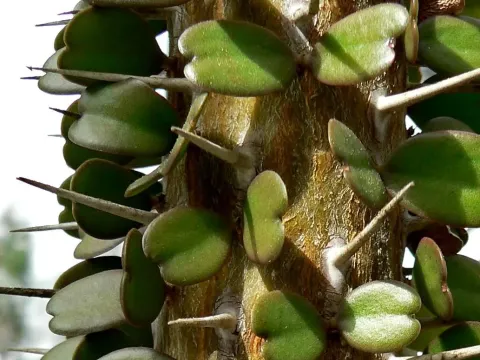
Alluaudia
Alluaudia
Alluaudia is a genus of deciduous succulent plants in the Didiereaceae family, native to Madagascar. These unique plants are characterized by their vertical, thorn-covered stems and small, fleshy leaves that appear during the growing season in response to moisture.
What the section contains


Alluaudia
Cultivation requires extreme sun exposure to maintain the plant's health and structural integrity. In an indoor or greenhouse setting, Alluaudia must be placed in a location with maximum daily sunlight, as shading will inevitably lead to etiolated, weak growth.
The substrate must be extremely well-draining, similar to the requirements for cacti. A mixture of pumice, perlite, and coarse sand with a minimal amount of organic potting soil ensures that roots do not remain damp for extended periods, preventing rot.
Watering should be managed carefully, following a strict seasonal cycle. During the growing season, water thoroughly only when the soil is completely dry. In winter, the plant enters dormancy, and watering should be reduced to a minimum or stopped altogether.
Propagation is primarily achieved via stem cuttings. When taking cuttings, it is crucial to allow the wound to callus over for several days in a shaded area before placing the stem into a dry, sandy rooting medium to prevent the entry of decay pathogens.
Root rot is the most significant threat to Alluaudia, usually caused by improper soil aeration or overwatering. Once a plant is severely affected by rot, recovery is difficult, making prevention through controlled irrigation the most effective management strategy.
Mealybugs are common pests that lodge themselves deep between the protective thorns, making them difficult to eradicate with contact pesticides alone. Systemic pesticides or manual removal with alcohol-soaked cotton swabs are the most effective control methods.
Spider mites can become a problem in low-humidity environments, leading to leaf drop and stunted growth. Increasing air circulation and maintaining proper moisture levels in the immediate environment help mitigate the risk of mite infestations.
Scale insects may attach to the woody parts of the stem, sapping nutrients from the plant. Regular inspection of the stem surface allows for the manual removal of these pests before they can reproduce and damage the plant's epidermis.
Fungal infections can occur during periods of high humidity and poor ventilation. Keeping the growing area clean and ensuring consistent airflow around the stems are essential practices to reduce the incidence of fungal-related diseases.