
Alluaudia montagnacii
Alluaudia montagnacii
Description
Growing requirements
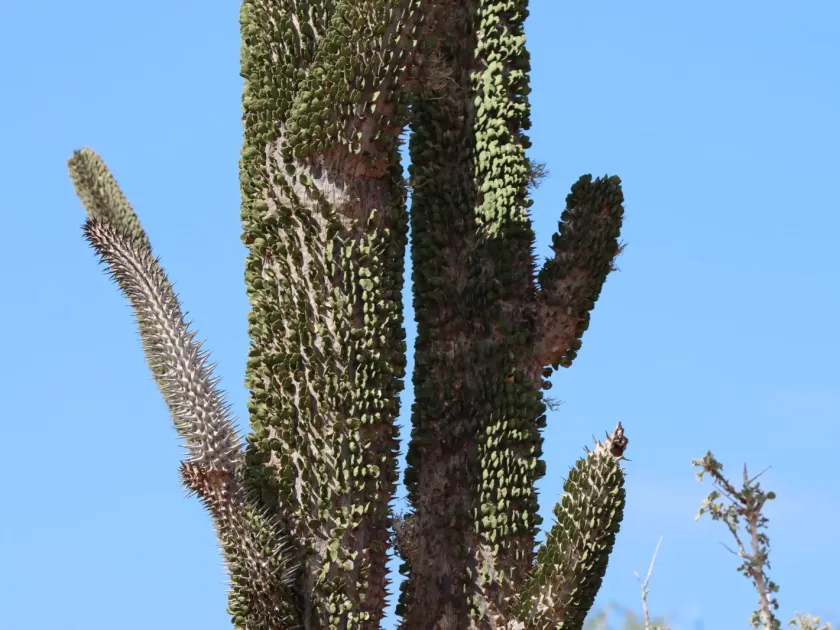
Alluaudia montagnacii is a distinctive succulent species belonging to the Didiereaceae family. Known for its vertical, spiny, and tree-like structure, this plant is an iconic representative of the unique flora found on the island of Madagascar.
In its native habitat, the plant thrives in arid, rocky environments with very high solar radiation. It has evolved to survive with minimal rainfall, storing water efficiently within its specialized woody stems and fleshy leaves.
To cultivate this species successfully, one must provide a highly porous and inorganic soil mix. A mixture of gravel, pumice, and coarse sand is essential to prevent water accumulation, which is the primary cause of root degradation.
The plant requires full sun exposure to maintain its structural integrity and typical growth form. In indoor or greenhouse environments, it should be placed in the brightest available location to avoid etiolation.
During the growing season, watering should be infrequent and deep, mimicking the sporadic rainfall patterns of its homeland. During the winter dormancy phase, irrigation should be strictly limited to prevent cold-related rot.
Main diseases and pests
The most significant threat to Alluaudia montagnacii is root rot, triggered by overwatering or poor soil drainage. Once the roots are compromised by fungal decay, recovery is difficult and often impossible.
Common pests include mealybugs and spider mites. Mealybugs often hide in the crevices between spines, making them difficult to detect until an infestation is well-established, which can severely stunt growth.
Spider mites are frequently attracted to the plant in environments with low humidity and high temperatures. Their activity leads to chlorosis and physical damage to the epidermal layers of the stems.
Environmental stress, specifically the lack of adequate light, weakens the plant’s defenses, making it more susceptible to opportunistic pathogens. A weakened plant is significantly less resistant to mechanical damage.
Integrated pest management, including regular inspection and the use of targeted acaricides or systemic insecticides, is recommended to keep the collection healthy and free from common succulent pests.