
Alluaudia ascendens
Alluaudia ascendens
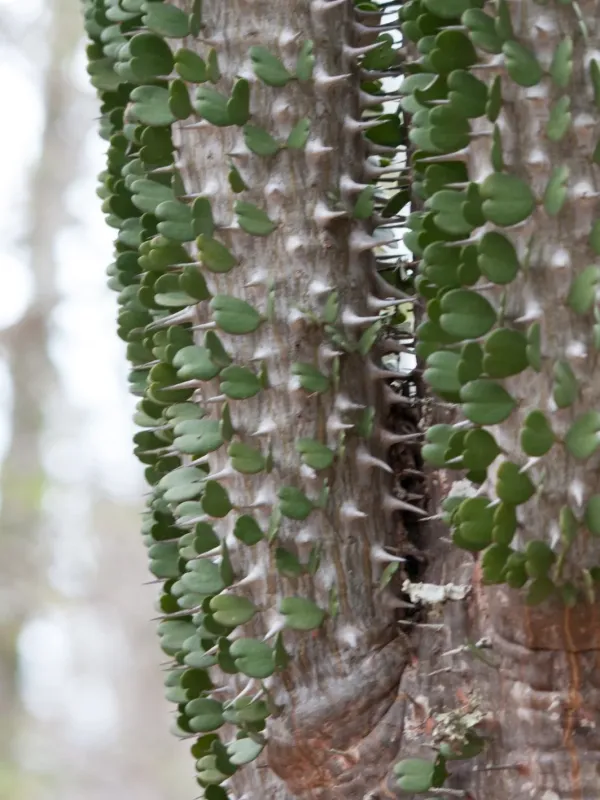
Description
Growing requirements
Alluaudia ascendens is a remarkable succulent shrub belonging to the Didiereaceae family. Known for its distinct columnar growth habit, it can reach significant heights in its natural environment, forming dense, spiny vertical structures.
Originating from the arid regions of southern and southwestern Madagascar, the plant has developed specialized mechanisms to survive long-term drought, making it an excellent example of xerophytic adaptation.
The cultivation of this species requires a highly porous and inorganic soil mix. A mixture consisting of cactus potting soil, volcanic rock, and coarse sand ensures the necessary aeration for the root system.
This crop thrives under intense light conditions. It is essential to provide direct sunlight for most of the day, as shaded environments lead to weak, elongated growth and a loss of the plant's natural structural integrity.
Watering management is the cornerstone of its success. During the active growing season, water sparingly, ensuring the substrate dries out completely between intervals. During the dormant winter phase, irrigation should be almost completely suspended.
Main diseases and pests
Root rot is the most common and fatal condition for Alluaudia ascendens. It is almost always a result of over-watering or using a medium that retains moisture for too long, leading to anaerobic conditions.
Mealybugs are the primary pest challenge for this species. These insects thrive in the protected areas between the thorns, making manual removal difficult and requiring the application of targeted systemic insecticides.
Spider mites can occur if the ambient air is excessively dry and stagnant for extended periods. Increasing airflow and misting the immediate environment can prevent infestations, though direct foliage spraying should be avoided.
Fungal infections may manifest as dark lesions on the stem, typically occurring during cooler, humid weather. Immediate isolation of affected specimens and improving air circulation is mandatory to stop the spread.
Environmental stress, primarily from sudden temperature drops combined with moisture, can lead to tissue collapse. Keeping the plant in a stable, warm environment is the best protection against both abiotic and biotic threats.