
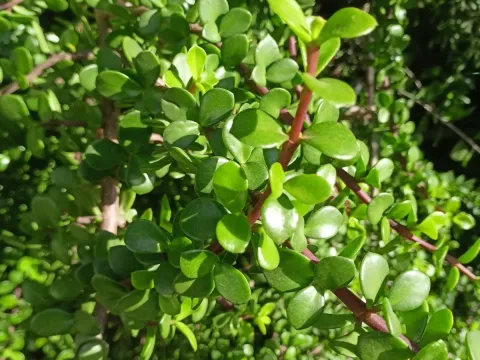
Portulacaria
Portulacaria Jacq.
Portulacaria is a genus of succulent shrubs belonging to the Didiereaceae family. Originally native to the arid landscapes of Southern Africa, these plants have evolved to store significant amounts of water in their thick leaves and stems.
What the section contains

Portulacaria
This crop requires intense sunlight to maintain its structural integrity and health. In cultivation, it thrives best in locations where it receives several hours of direct light daily, preventing the stems from becoming leggy or weak.
The soil must be well-draining, typically consisting of a mix of sand, grit, and organic matter. Proper aeration is crucial, as the roots are highly susceptible to damage if they remain waterlogged for extended periods.
Optimal growth occurs at warm temperatures between 20 and 28 degrees Celsius. During the dormant winter season, the plants benefit from cooler temperatures, which encourage metabolic stability and future flowering.
Watering practices are essential for successful production; the substrate should be allowed to dry out completely between irrigation events. During dormancy, water intake should be strictly limited to prevent physiological disorders.
Common pests include mealybugs and spider mites, which thrive in low-humidity environments. These insects target the succulent tissues, leading to stunted growth and damage to the dermal layers of the leaves.
Root rot is the most serious threat, usually caused by poor drainage or overwatering. Once the root system is compromised, the plant may lose its ability to uptake nutrients, leading to rapid decline.
Fungal infections can occur if the foliage remains wet for too long or if the plant is kept in poor ventilation. Good air circulation is essential for the prevention of mold and mildew outbreaks.
Early detection of pests involves checking leaf axils and the undersides of the leaves. If an infestation is found, systemic insecticides or horticultural oils may be used to manage the population effectively.
Proper maintenance, such as pruning damaged branches and ensuring the correct soil pH, supports the plant's natural defense systems. Keeping the plant vigorous is the best defense against pests and diseases.