
Alluaudia procera
Alluaudia procera
Description
Growing requirements
Alluaudia procera is a remarkable succulent shrub belonging to the Didiereaceae family. Endemic to the spiny forests of southern Madagascar, it is highly valued for its striking, column-like growth habit and evolutionary adaptation to arid climates.
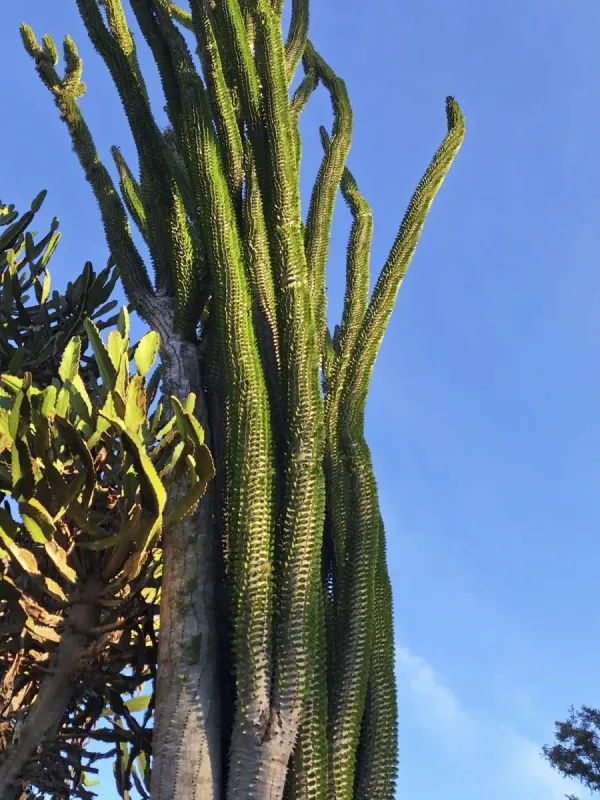
The plant features a tall, vertical trunk armed with sharp spines, arranged in a spiral pattern. These spines serve both as protection and as a way to reduce surface area for water transpiration, while small, fleshy leaves develop along the branches during the wet season.
Regarding light requirements, this species demands intense, full sun exposure. In greenhouse or indoor environments, providing maximum light intensity is mandatory to maintain the plant's structural integrity and avoid etiolation.
The ideal growing medium must be highly inorganic, consisting of a mix of coarse sand, pumice, and minimal compost. Excellent drainage is paramount, as water retention in the potting mix is the most common cause of root system failure.
As for the climatic requirements, Alluaudia procera is strictly thermophilic. It requires warm temperatures throughout the growing season and a dry, dormant period during the cooler months, ensuring the temperature never drops near freezing points.
Main diseases and pests
The primary threat to the vitality of Alluaudia procera is root rot caused by stagnant water in the soil. Overwatering, especially during the dormant winter phase, can cause irreversible damage to the lower trunk and root system.
Pest problems are frequently associated with mealybugs and spider mites. These pests thrive in dry conditions and can easily nest between the sharp spines, making them difficult to detect and remove manually.
Effective pest management involves the use of systemic insecticides designed for succulent plants. Regular monitoring of the plant's canopy is essential to catch infestations before they spread to the entire surface of the trunk.
Fungal pathogens represent an additional risk, usually manifesting as dark, soft spots on the epidermis. These infections are often a consequence of high humidity paired with low light levels or poor air circulation in the greenhouse.
To ensure plant health, it is vital to keep the plant in a well-ventilated area and avoid splashing water directly onto the stem. Any sign of softening or discoloration should be treated immediately by reducing moisture and applying appropriate fungicides.