
Kyllinga squamulata
Kyllinga squamulata
Description
Sowing dates
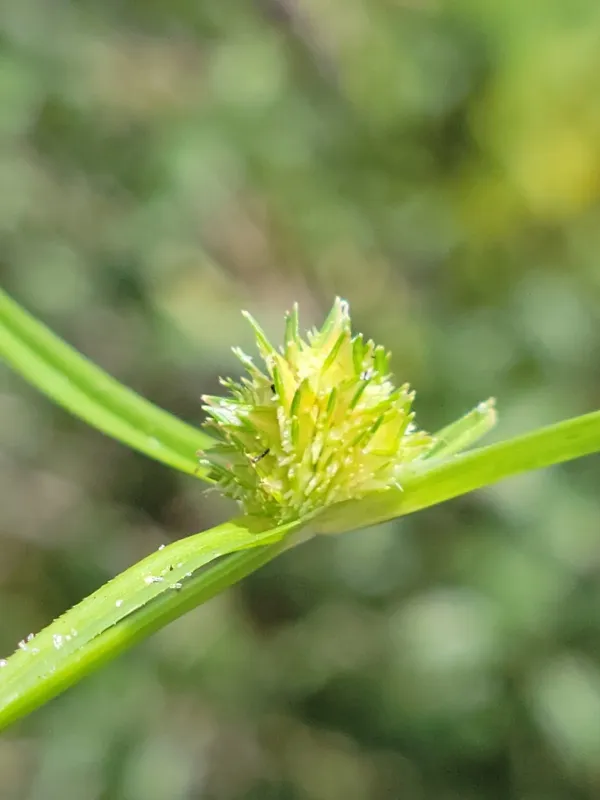
Kyllinga squamulata is an annual sedge species belonging to the Cyperaceae family. It is widely recognized as a problematic weed in moist environments, particularly in rice-growing regions where it thrives alongside the primary crop.
The propagation of the plant relies on seed production. Seeds typically germinate during the late spring and early summer when temperatures and soil moisture levels are optimal for development. The seeds can remain viable in the soil seed bank for extended periods.
To ensure successful growth, the plant requires open, moist soil surfaces. In a managed agricultural setting, the timing of germination often coincides with the start of the irrigation season for crops like rice, giving the weed a competitive advantage.
The germination process can be accelerated by warm temperatures (above 20 degrees Celsius). In controlled agricultural environments, farmers monitor for the first flush of seedlings to apply pre-emergent or post-emergent herbicides effectively before the plant establishes a deep root system.
Managing the seed bank is a key part of the agricultural cycle. By rotating crops and using mechanical weeding techniques early in the season, farmers can significantly reduce the potential density of the next generation of Kyllinga squamulata.
Growing requirements
Kyllinga squamulata is highly adapted to wetland ecosystems and thrives in poorly drained soils. Its ability to tolerate waterlogged conditions makes it exceptionally well-suited for irrigation-based agriculture such as paddy fields.
The plant requires high levels of solar radiation to reach maturity. While it is tolerant to moisture, it is not a shade-tolerant species; therefore, it usually exploits gaps in canopy cover to achieve its full vegetative potential.
Temperature is a major limiting factor for its distribution. The species prefers warm, humid tropical and subtropical climates and is highly sensitive to frost. Growth is most vigorous when ambient temperatures range between 22 and 30 degrees Celsius.
Regarding soil requirements, the plant shows great plasticity. It can grow in diverse substrates, from heavy clay soils to loamy mixtures. It is particularly efficient at extracting nitrogen and phosphorus from the soil, which helps it outperform slower-growing crops.
Optimal growth is observed in neutral to slightly acidic pH conditions. While it can survive on lower-quality soil, high nutrient availability significantly increases the number of tillers and spikes, leading to more extensive seed dispersal.
Main diseases and pests
Pathogenic fungi are the primary threats to the health of this species. Rusts and various leaf-spotting fungi frequently occur during the monsoon season or during periods of high humidity, which can weaken the plant's structural integrity.
In terms of insect pressure, various species of sap-sucking insects, such as aphids and thrips, frequently colonize the flower heads. These pests drain the plant of energy and can cause stunted growth or reduced seed quality, although they rarely eliminate the population.
Root-knot nematodes can also affect the subterranean portions of the plant. By forming galls on the root system, these organisms interfere with water and nutrient uptake, causing the plant to show signs of stress even when external moisture is abundant.
Biological control agents are often studied to manage this species in agricultural settings. Some insects that specialize in the Cyperaceae family provide a natural check on the population, reducing the need for intensive chemical interventions.
Effective management strategies combine cultural practices, such as precise irrigation control, with targeted chemical applications. This holistic approach helps keep the population of Kyllinga squamulata below economic thresholds in agricultural fields.