
Kyllinga gracillima
Kyllinga gracillima
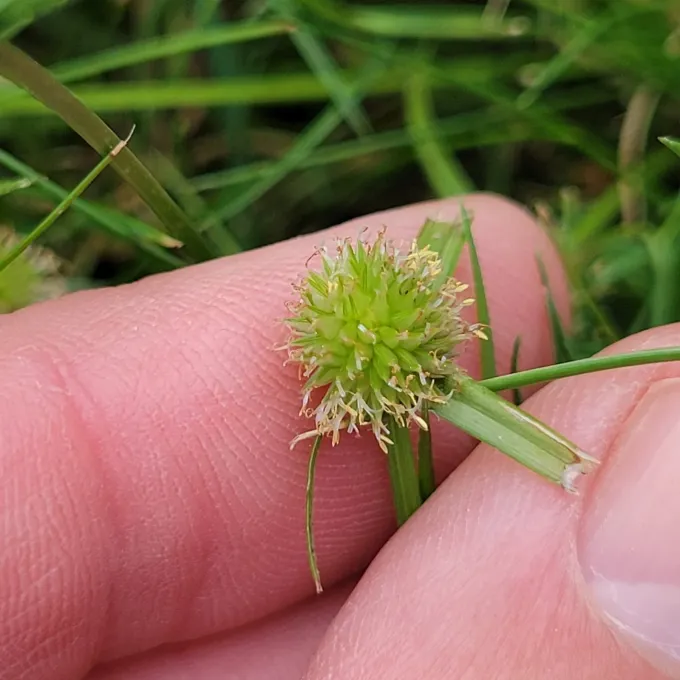
Description
Growing requirements
Kyllinga gracillima, commonly known as a type of kyllinga sedge, belongs to the Cyperaceae family. It is primarily recognized as a persistent weed that affects agricultural productivity in wet environments.
The species originates from East Asia but has successfully invaded various parts of the world, particularly thriving in North American landscapes and agricultural zones.
Botanically, it features triangular stems and distinctive seed heads. Its most invasive trait is the extensive network of rhizomes, which allows it to spread rapidly across moist substrates.
The plant requires high moisture levels to establish. It prefers heavy, wet soils and is frequently found in irrigation ditches, flooded fields, and areas with poor drainage systems.
Effective management requires a combination of chemical control, specifically using sedge-targeting herbicides, and cultural practices like improving field drainage to make the environment less hospitable.
Main diseases and pests
While the plant is hardy and resistant to many local pathogens, its presence can host various soil-borne diseases that may affect subsequent crops if not managed.
There are no significant pests that limit the growth of Kyllinga gracillima; in fact, its aggressive nature makes it a dominant species in competition with sensitive crops.
The main threat is the significant reduction in crop yield caused by the plant's ability to outcompete nutrient-demanding crops for light, water, and minerals.
Furthermore, its rhizomatous structure makes mechanical removal extremely difficult, as any remaining fragment can easily regenerate, creating a recurring infestation cycle.
Field managers should prioritize early detection, as the weed can form dense mats that are almost impossible to penetrate without complete soil renovation or intensive chemical treatment.