
Gahnia javanica
Gahnia javanica
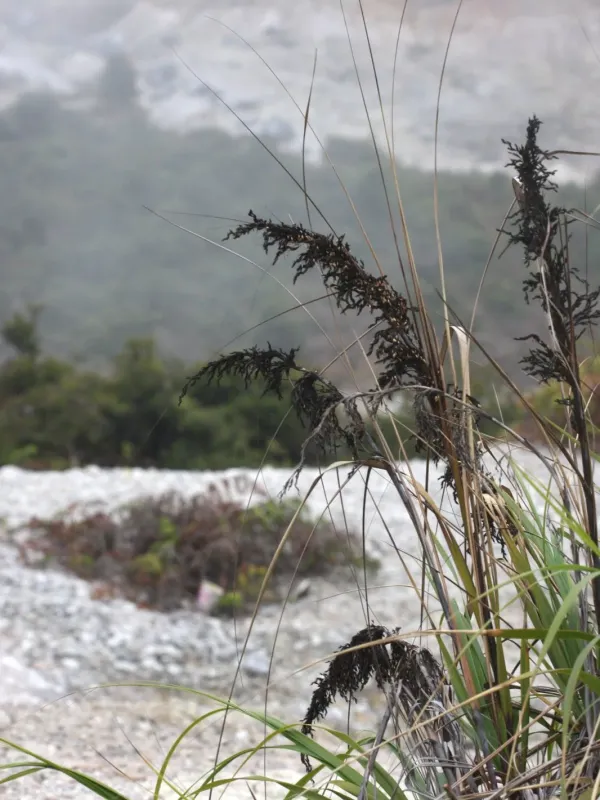
Description
Growing requirements
Gahnia javanica is a perennial herbaceous plant belonging to the Sedge family (Cyperaceae). It typically grows as a large, tufted, grass-like plant that can form dense colonies in its natural environment, providing significant ground cover in diverse tropical settings.
The plant is native to the tropical regions of Southeast Asia, specifically across Indonesia and the surrounding archipelago. It is commonly found in high-altitude habitats, volcanic terrains, and open sunny areas where humidity levels remain relatively high throughout the year.
Regarding soil requirements, Gahnia javanica is highly adaptable and can thrive in nutrient-poor, rocky, or acidic soils. This resilience allows it to colonize challenging landscapes where other vegetation might struggle to survive, making it ecologically important.
Its botanical structure is defined by long, narrow, and often sharp-edged leaves that emerge from a robust base. The inflorescence consists of large, branching panicles that carry small, inconspicuous flowers, which are characteristic of many species within the genus Gahnia.
In terms of usage, the plant is valued primarily for erosion control and landscape restoration due to its deep and effective root system. While it has limited traditional agricultural value, it serves as an excellent ornamental specimen in tropical gardens and sustainable land management projects.