
Gahnia sieberiana
Gahnia sieberiana
Description
Growing requirements
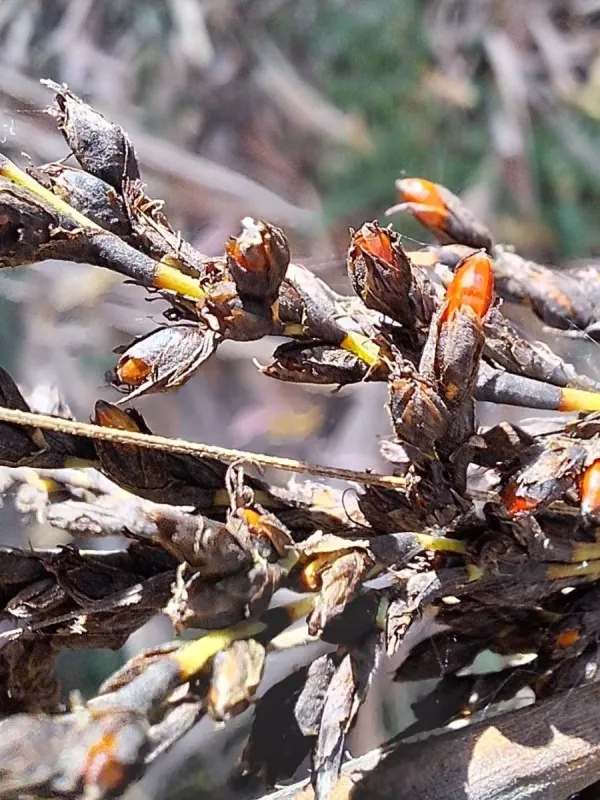
Gahnia sieberiana, commonly known as the Red-fruited Saw Sedge, is a robust perennial monocot belonging to the Cyperaceae family. Originating from the eastern coastal regions of Australia, it is well-adapted to humid environments and thrives in diverse habitats ranging from open forests to swamp margins.
The plant requires deep, moisture-retentive soils that are rich in organic matter to reach its full potential. While it exhibits a preference for semi-shaded locations, it can tolerate varying light conditions provided that the soil moisture levels are consistently maintained throughout the growing season.
Climatic requirements for Gahnia sieberiana focus on avoiding extreme frost, as the species is essentially a frost-sensitive plant. Providing a sheltered environment or a mild maritime climate ensures the plant maintains its structural integrity and aesthetic appeal year-round.
Agrotechnical practices for this crop involve periodic mulching to suppress weeds and retain soil humidity. During the establishment phase, supplemental irrigation is necessary to ensure the root system is well-anchored and capable of supporting the large, arching foliage typical of the species.
Economically, Gahnia sieberiana is valued primarily for its role in ornamental horticulture and environmental restoration. Its dense foliage and extensive root system make it an excellent candidate for stabilizing embankments and preventing erosion in landscaping projects.
Main diseases and pests
The primary threats to Gahnia sieberiana include root rot pathogens, which are typically exacerbated by waterlogged soil conditions. Ensuring proper drainage is the most effective management strategy to prevent these physiological and fungal disorders.
Insect pests are relatively rare due to the sharp, saw-toothed margins of the leaves, which provide a natural defense mechanism. However, vigilance against infestations during periods of extreme environmental stress is recommended to preserve the overall health of the planting.