
Gahnia procera
Gahnia procera
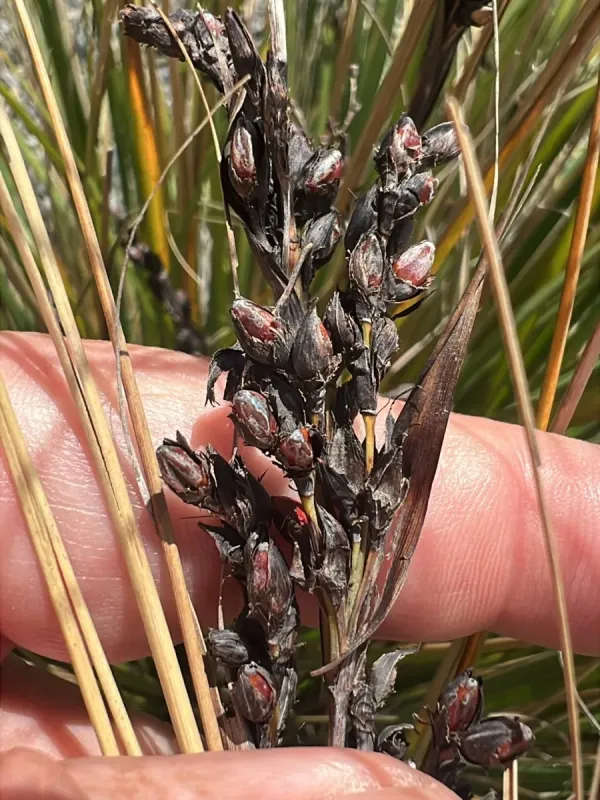
Description
Growing requirements
Gahnia procera is a perennial herbaceous plant belonging to the Cyperaceae family. Originating from the humid forests and damp sites of New Zealand, this species is highly valued for its robust growth habit and structural beauty in ecological settings.
Botanically, the plant is distinguished by its tough, linear leaves that form dense, arching tufts. The inflorescences are dense panicles that transition into dark, mahogany-colored seed heads, providing significant ornamental interest during the autumn and winter months.
To cultivate Gahnia procera successfully, one must provide a site with consistent moisture and high humidity. While it thrives in damp conditions, the soil must be well-drained and slightly acidic, mimicking the rich forest floor environments of its native habitat.
Agricultural and horticultural practices for this species focus on stability and soil retention. Due to its dense root system, it is an excellent candidate for erosion control on slopes and near water bodies where stable ground is essential.
In landscape design, it serves as a structural perennial that provides year-round interest. It is best utilized in temperate, moisture-retaining garden spaces, particularly in areas where naturalistic or native-inspired plantings are desired.
Main diseases and pests
The primary threats to Gahnia procera involve fungal pathogens that thrive in stagnant, poorly ventilated conditions. Root rot is a common issue when the plant is subjected to waterlogged soil during periods of low temperature and limited growth activity.
Pests such as leaf-eating insects and certain nematodes may periodically infest the foliage. While the tough nature of the leaves provides some resistance, significant infestations can compromise the overall health and appearance of the specimen.
Prevention strategies are centered on ensuring proper spacing between plants to allow for adequate airflow. Maintaining a clean growing environment by removing dead foliage and debris reduces the likelihood of fungal spores settling and germinating on the plant tissue.
If pathogens are detected, sanitary pruning is the most effective approach to stop the spread of infection. Applying fungicides should only be considered as a last resort, as the environmental sensitivity of the plant and its surrounding habitat must be prioritized.
Proper irrigation management is vital to balance moisture needs with the risk of disease. Observing the plant for signs of chlorosis or stunted growth can indicate root health issues, allowing for early intervention before the damage becomes irreversible.