
Gahnia xanthocarpa
Gahnia xanthocarpa
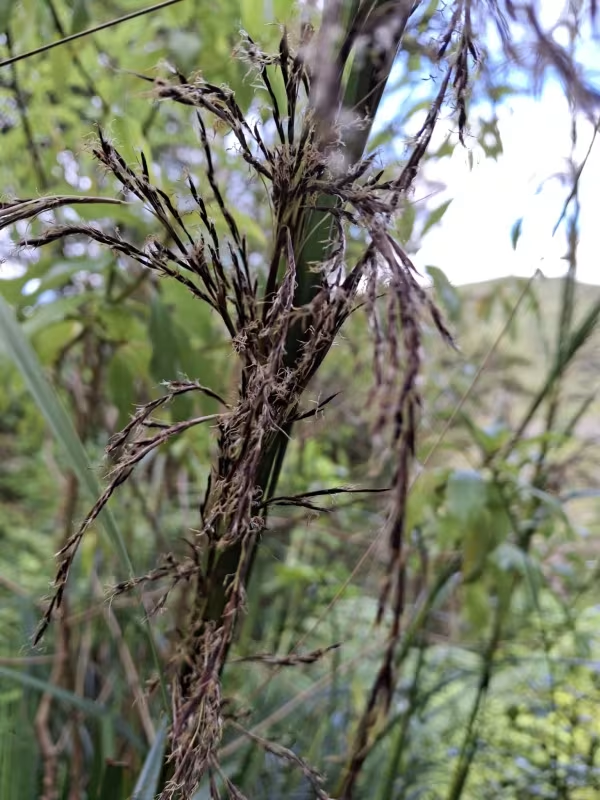
Description
Sowing dates
Gahnia xanthocarpa belongs to the Cyperaceae family. It is a robust, perennial, grass-like plant known for its dense growth habit and architectural value in managed landscapes.
Propagation is typically carried out through division of established clumps or careful seed sowing during the early spring when temperatures are consistently above freezing.
The seeds require a well-aerated, moisture-retentive, but well-drained substrate to germinate successfully, often benefiting from light exposure during the initial stages.
Spacing is a critical factor; due to the significant spread of mature specimens, plants should be placed at least 1 to 1.5 meters apart to ensure optimal airflow and development.
Initial establishment requires vigilance regarding weed control, as the young plants are slow to develop and can be easily outcompeted by aggressive field weeds.
Growing requirements
Native to specific temperate regions, the species thrives in sunny, open locations that provide the high light intensity required to maintain its structural integrity and foliage color.
It prefers fertile, well-drained soils and shows a clear sensitivity to waterlogged conditions, which can lead to rapid root decline or crown rot if not managed properly.
While the species is quite hardy once established, it requires consistent moisture during its first growth season to develop a sufficiently deep and functional root system.
The plant is adapted to moderate climatic conditions and can withstand seasonal fluctuations, though it benefits from shelter against excessive drying winds that might desiccate the leaves.
Nutritional needs are moderate, with a preference for slightly acidic to neutral soils; excessive nitrogen application should be avoided to prevent weak, succulent growth.
Main diseases and pests
Gahnia xanthocarpa is generally resistant to many common agricultural pests, but it can be susceptible to scale insects that colonize the dense base of the leaf sheaves.
Fungal pathogens represent the most significant threat, particularly in environments with high humidity and poor air circulation, leading to leaf spotting or crown infections.
Root rot caused by Phytophthora species is a major risk in heavy, poorly drained soils during prolonged wet periods, often leading to the sudden collapse of the plant.
Mechanical damage to the leaves can create entry points for opportunistic pathogens, requiring careful handling during pruning or maintenance operations.
Integrated pest management strategies focusing on promoting airflow and proper drainage remain the most effective methods for controlling potential threats to this crop.
Harvesting
The primary agricultural and economic use of Gahnia xanthocarpa lies in its application for landscaping, erosion control, and the collection of ornamental inflorescences.
Harvesting for decorative use involves cutting the long, golden-hued flower stalks once they have reached full maturity but before the seed structures begin to shatter.
Manual harvest is mandatory due to the tough, serrated, and razor-sharp leaf edges, which require workers to wear heavy-duty protective gloves during the process.
Post-harvest handling focuses on drying the stems in a cool, shaded environment with constant airflow to preserve their natural structural rigidity and color.
Regular maintenance harvesting, or the removal of senescent biomass, is essential to keep the planting healthy and to reduce the accumulation of fire-prone dry material.