
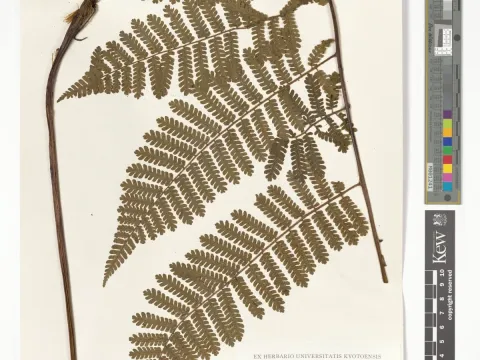
Sphaeropteris wallacei
Sphaeropteris wallacei
Sphaeropteris wallacei is a notable species of tree fern belonging to the Cyatheaceae family. Originally native to the humid tropical forests of the Maluku Islands, this plant is characterized by its significant height and majestic, arching fronds that emerge from a central trunk.
What the section contains
Sphaeropteris wallacei
The botanical structure of this fern includes a tall, fibrous trunk that serves as a support for the extensive canopy of fronds. These fronds are pinnate and can span several meters, making the plant a spectacular centerpiece for large conservatories and tropical gardens.
Climate requirements for this species are strict, necessitating a consistently warm environment between 18 and 28 degrees Celsius. Protection from cold winds and frost is essential, as the vascular structure of tree ferns is highly susceptible to tissue damage at lower temperatures.
Soil composition must be highly permeable, mimicking the forest floor environment. An ideal substrate consists of a mixture of coarse peat, bark, and volcanic rock to ensure rapid drainage while maintaining the necessary moisture retention for root health.
Lighting conditions should simulate the understory of a rainforest. Bright, filtered light is optimal, as it provides enough energy for growth without causing desiccation or sunscald on the delicate tissues of the expanding croziers.
Spider mites are the most persistent pest for Sphaeropteris wallacei in indoor or low-humidity environments. These tiny arachnids thrive in dry conditions and can cause severe damage to the foliage if not managed with regular misting and biological control.
Root rot, driven by stagnant water and insufficient oxygen in the substrate, poses a lethal threat. It is crucial to monitor irrigation frequency carefully, ensuring that the roots remain damp but never waterlogged to avoid anaerobic conditions.
Mealybugs are known to colonize the base of the fronds, where they hide within the crevices of the trunk. Persistent monitoring is required, as these pests reproduce rapidly and can weaken the structural integrity of the plant over time.
Scale insects can become a significant issue, presenting as small brown bumps on the stalks. If ignored, they significantly reduce the vigor of the fern, making it more vulnerable to secondary bacterial infections that target weakened tissue.
Lack of proper air circulation often leads to the development of fungal spores on the underside of the fronds. Maintaining a gentle breeze or using a fan in indoor settings is a proactive measure to keep the foliage dry and disease-free.