
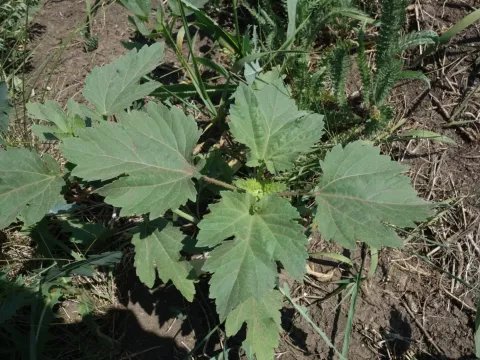
Cyclachaena xanthiifolia
Cyclachaena xanthiifolia
Cyclachaena xanthiifolia, commonly known as common marsh elder, is an annual herbaceous plant belonging to the Asteraceae family. Originating from North America, it has become a significant invasive species in various parts of the globe, including Europe and Asia.
What the section contains
Cyclachaena xanthiifolia
The plant exhibits high ecological plasticity, allowing it to colonize a wide range of habitats. It thrives in fertile agricultural soils but is equally successful in disturbed areas, roadsides, and waste grounds where it competes for space and sunlight with native vegetation.
Environmental requirements for growth include a warm climate and moderate to high soil moisture. Although it can withstand short periods of drought, the plant reaches its maximum height, often exceeding two meters, when growing in moist and nutrient-rich environments.
Effective agrotechnical management involves strict suppression measures. Farmers are advised to conduct early mechanical cultivation and deep plowing to prevent the weed from establishing a strong root system and reaching the flowering stage.
The economic value of this plant is negligible, and it is primarily managed as a troublesome weed. While some experimental projects look into its biomass potential, the risks associated with its invasive spread generally prohibit any formal agricultural use of the species.
Cyclachaena xanthiifolia is a severe competitor in agricultural fields, as it quickly overtops standard crops like corn, soybean, and sunflower. This shading effect significantly reduces the photosynthetic efficiency of the crops and leads to substantial yield losses.
The plant is relatively resistant to common pests and diseases, which contributes to its status as a highly successful invader. Very few insects or fungi are able to effectively regulate its population density under natural or agricultural conditions.
A major health concern associated with this plant is its wind-borne pollen, which is a potent allergen. During the flowering period, it causes severe respiratory discomfort and allergic reactions, making its control mandatory in and around populated areas.
Seed bank persistence is a critical factor in its spread, as seeds can remain viable in the soil for extended periods. Contamination of grain harvests with marsh elder seeds poses a major challenge for seed processing facilities and grain storage systems.
Integrated weed management remains the most reliable strategy. This includes the application of systemic herbicides in the early vegetative stage, followed by physical removal to prevent any seed production throughout the growing season.