
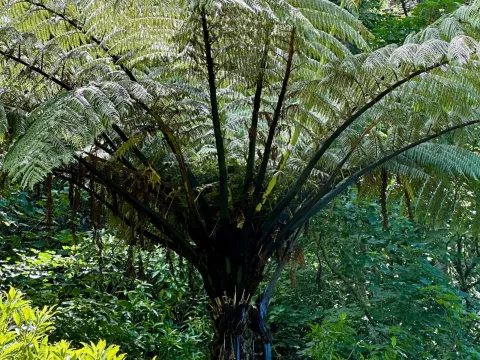
Sphaeropteris medullaris
Sphaeropteris medullaris
Sphaeropteris medullaris, commonly known as the black tree fern, is a majestic member of the Cyatheaceae family. It is prized for its dark, dramatic stipes and enormous fronds that form a canopy, making it a prominent feature in subtropical landscapes.
What the section contains
Sphaeropteris medullaris
Native to New Zealand and the Pacific Islands, this species thrives in humid, shaded forest environments. It requires a climate that remains mild throughout the year, as it lacks significant frost tolerance compared to smaller fern species.
To cultivate this fern successfully, one must prioritize a consistent moisture level in both the soil and the ambient air. It thrives in positions sheltered from direct, harsh sunlight, which can easily scorch its expansive foliage.
The soil requirements are specific: it demands a loose, well-draining substrate rich in organic matter. A mixture of peat, coarse bark, and forest compost typically provides the best root environment, preventing waterlogging while retaining necessary nutrients.
Agricultural management involves regular watering, ideally focused on the soil surface and the top of the trunk, where the fern absorbs nutrients. Consistent, light fertilization during the growing season supports the development of its massive fronds.
The primary threat to the black tree fern is low humidity, which rapidly causes fronds to turn brown and brittle. Maintaining a moist microclimate is essential for long-term survival in non-native environments.
Pests such as spider mites and scale insects are common. These organisms thrive in dry conditions and can cause severe damage to the vascular system of the fern if not addressed early with insecticidal treatments.
Root rot caused by Oomycetes or various fungi is a significant concern if the drainage is inadequate. Overwatering, especially during cooler periods, significantly increases the risk of plant loss.
Mealybugs may establish colonies in the crown of the fern or between the old leaf bases on the trunk. Periodic inspection of these areas is necessary to detect infestations before they spread significantly.
Sanitation is key to disease management; removing senescent or diseased fronds promptly prevents the buildup of pathogens. Proper airflow is also critical to minimize the incidence of fungal leaf spots.