
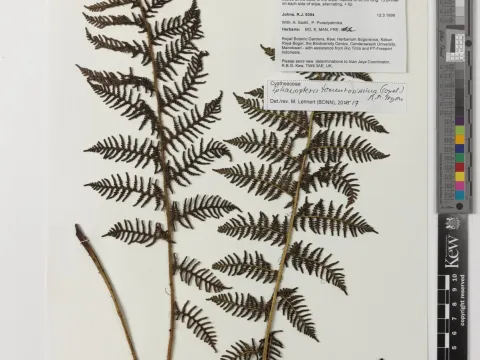
Sphaeropteris tomentosissima
Sphaeropteris tomentosissima
Sphaeropteris tomentosissima is a remarkable species belonging to the Cyatheaceae family, renowned for its distinct tree-like habit. This fern species typically features a robust trunk densely covered with trichomes or scales, providing it with a characteristic fuzzy appearance that aids in water retention in its native habitats.
What the section contains
Sphaeropteris tomentosissima
Originating from tropical ecosystems, this fern thrives in environments with high humidity and diffused light. Its natural distribution is largely restricted to mountainous rainforest regions where cloud cover provides consistent moisture levels throughout the year.
Cultivation requirements involve a specialized, well-draining substrate rich in organic matter, typically utilizing peat moss, orchid bark, and perlite. A consistently moist root zone is essential for growth, yet it is crucial to prevent the substrate from becoming waterlogged, as this leads to root decay.
Temperature management is a primary concern for growers, as this fern does not tolerate frost or cold drafts. Maintenance of stable, warm ambient temperatures and high humidity levels—often exceeding 70%—is necessary to keep the fronds healthy and prevent desiccation.
In terms of agricultural and horticultural use, the species is cultivated primarily as an ornamental specimen for botanic gardens and conservatories. It serves as a visual centerpiece, prized by collectors for its architectural form and prehistoric aesthetic.
The primary threats to Sphaeropteris tomentosissima include various scale insects and mealybugs, which tend to congregate in the protected areas of the trunk and the base of the fronds. Regular inspection and targeted application of horticultural oils can help manage these pests.
Fungal pathogens represent the most significant threat to the plant's structural integrity. Issues such as stem rot and root rot are prevalent in environments with poor air circulation or over-saturation of the potting mix, necessitating careful water management and professional sanitary practices.