
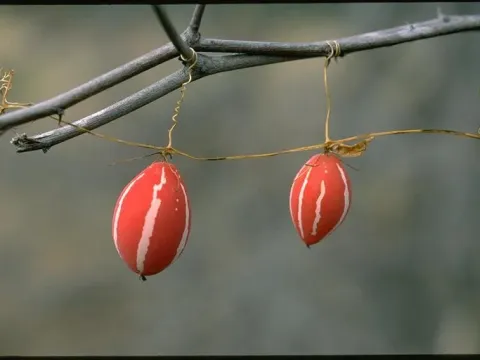
Diplocyclos
Diplocyclos
Sowing of Diplocyclos is primarily conducted by seeds during the spring season. The optimal timing is late April or early May when soil temperatures consistently reach 15–18 degrees Celsius.
What the section contains

Diplocyclos
To accelerate germination, seeds should be soaked in warm water or growth stimulants for several hours prior to planting. They can be sown directly into open ground or into seedling trays if early flowering is desired.
The sowing depth should be approximately 2–3 centimeters. It is crucial to maintain proper spacing between plants, as the vine grows rapidly and requires significant room for vertical development of its stems.
When using the transplant method, seedlings should be pricked out into individual pots after the first pair of true leaves emerges. Transplanting to the permanent site must occur only after the threat of spring frost has fully passed.
Temperature stability is vital during the germination phase to ensure healthy seedling development. Sprouts typically appear within 10–14 days, provided they receive sufficient lighting and moderate substrate moisture.
Diplocyclos belongs to the Cucurbitaceae family and represents a fast-growing annual or perennial vine, depending on the climatic conditions of the cultivation region.
The plant prefers sunny locations protected from strong winds. For active growth, the vine requires a reliable support system, which it climbs using its tendrils, potentially reaching several meters in length.
The soil must be fertile, loose, and well-drained. The crop does not tolerate waterlogging in the root system, so sand or organic conditioners should be incorporated into heavy clay soils.
Moisture requirements are high; during dry periods, the vine needs regular irrigation. A lack of water leads to stunted shoot growth and premature yellowing of the foliage.
For abundant fruit production, applying complex mineral fertilizers during the active vegetative growth phase is highly recommended. Nitrogen-based blends stimulate foliage, while phosphorus-potassium fertilizers support fruit set.
Powdery mildew is the primary threat to Diplocyclos, typically triggered by high humidity and poor air circulation. Broad-spectrum fungicides are effective for managing these infections.
Among pests, spider mites are the most common, thriving in hot and dry conditions. Prevention involves regular misting and maintaining an optimal humidity level around the plant canopy.
Aphids can also damage young shoots and developing ovaries. Utilizing biological or chemical insecticides helps to effectively control insect populations across the planting site.
Root rot is often a consequence of overwatering combined with low soil temperatures. Crop rotation and avoiding high planting densities are essential to ensure adequate aeration of the root zone.
Regular monitoring of the plants allows for the early detection of stress symptoms or disease. Prompt removal of heavily damaged plant parts is necessary to prevent the spread of pathogens throughout the patch.