
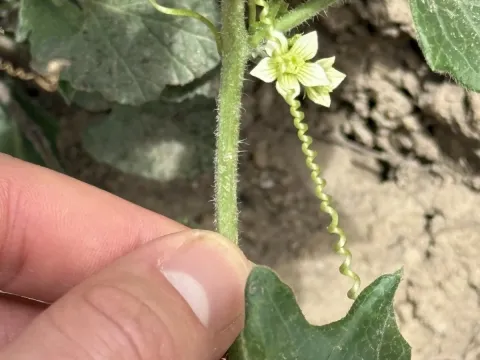
White bryony
Bryonia dioica
Sowing of White bryony (Bryonia dioica) is typically executed in autumn or early spring after seeds undergo a stratification process. Seeds should be planted at a depth of 2–3 centimeters in well-prepared, loose soil to facilitate emergence.
What the section contains
White bryony
For spring sowing, maintaining consistent soil moisture is crucial, as the seeds have a hard seed coat that requires significant hydration. An optimal soil temperature for germination is between 18 and 20 degrees Celsius.
Spacing should be managed at 50–70 centimeters between plants, providing enough room for the vigorous growth of the vine. Since the plant produces numerous seeds, growers must control its spread to prevent the crop from becoming an invasive weed on the farm.
In the first year, the plant focuses primarily on developing its fleshy, turnip-shaped root system, while the aerial growth remains relatively moderate compared to subsequent seasons.
Using high-quality stratified seeds ensures a higher germination rate and a more uniform crop establishment, which is essential for consistent productivity in commercial cultivation.
White bryony thrives in fertile, well-drained calcareous soils with a neutral to slightly alkaline pH. Drainage is paramount, as the plant is susceptible to root rot if water stagnation occurs in the soil profile.
The crop prefers sunny to partially shaded locations and requires sturdy trellises or supports to climb. The plant uses its tendrils to attach to vertical surfaces, making the installation of support structures a mandatory part of the infrastructure.
As a member of the Cucurbitaceae family, the plant requires balanced fertilization rich in nitrogen, phosphorus, and potassium to support its rapid biomass production during the active growing season.
Although the plant is somewhat drought-tolerant due to its succulent root, regular irrigation during peak summer months is recommended to maximize the size and quality of the harvested roots.
The plant is hardy and capable of surviving winter dormant periods as long as the roots are protected by mulch or snow cover. It is advisable to choose sites protected from harsh, desiccating winds.
The economic focus of White bryony production is the harvest of the roots, which are utilized in the pharmaceutical and homeopathic industries. The yield depends on the age of the crop and the level of agronomic care provided.
Maximum yield potential is realized by the third or fourth year of growth, when the roots reach significant size and concentrate high levels of bioactive compounds such as cucurbitacins.
The plant is known for its pharmacological potential, though caution is required as all parts of the plant, especially the berries, are considered toxic if ingested. Agronomic practices must prioritize the safety of workers during cultivation.
Seed production is prolific, allowing farmers to maintain their stock through their own seed harvesting. This self-sufficiency supports sustainable production models on a larger scale.
Consistent quality standards must be maintained, as the chemical composition of the root varies based on the soil type and nutrient management strategies used throughout the cultivation cycle.
Powdery mildew is a common threat to White bryony, manifesting as a white fungal coating on the foliage during periods of high humidity and warm temperatures. Proper air circulation is essential for mitigation.
Root rot is the most destructive issue, usually resulting from poor drainage or excessive irrigation. This condition leads to the rapid decline of the entire plant and is difficult to treat once established.
Pests such as aphids and spider mites frequently target the succulent leaves of the plant, especially during dry spells. Monitoring these populations early is critical to preventing damage to the vine's health.
Bacterial leaf spot can also affect the crop, particularly in dense plantings. Good sanitation practices, including removing infected plant debris at the end of the season, are necessary to limit the spread of pathogens.
Integrated pest management, focusing on biological controls and minimal synthetic chemical use, is preferred to ensure the high purity required for medicinal applications.
Harvesting takes place in late autumn after the aerial stems have naturally withered. This timing ensures that the root system has accumulated the maximum concentration of its active constituents.
The roots are carefully extracted from the soil, typically using specialized tools to ensure the root remains intact. Avoiding damage is critical, as injured roots are more prone to infection and decay after harvest.
Post-harvest processing involves washing the roots, trimming secondary appendages, and quickly preparing them for drying. This prevents microbial contamination and degradation of the bioactive compounds.
Drying must be conducted in well-ventilated areas or controlled-temperature ovens at 40–50 degrees Celsius. Excessive heat can degrade the complex organic molecules within the root.
Once dried, the product should be stored in opaque, moisture-proof containers in a cool environment to maintain its potency and shelf life for industrial or laboratory use.