
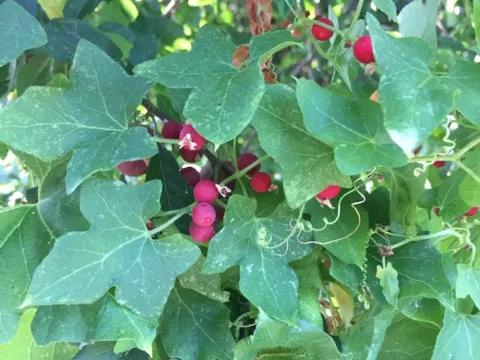
White bryony
Bryonia cretica
Sowing of White bryony seeds is optimally conducted in the autumn, allowing the seeds to undergo natural stratification, which is critical for breaking dormancy.
What the section contains
White bryony
If spring sowing is required, seeds must be kept in a cold, moist environment for at least eight weeks to simulate winter conditions and ensure high germination rates.
Seeds should be planted at a depth of 2 to 3 centimeters into well-drained, fertile soil that has been prepared to a fine tilth.
For commercial production, a spacing of 60–80 centimeters between rows is recommended to allow for plant vigor and ease of maintenance.
Regular irrigation is essential during the germination phase to maintain consistent soil moisture, which prevents the drying out of the sensitive emerging seedlings.
The plant thrives in sunny to semi-shaded environments and requires soils with a neutral or slightly alkaline pH to reach its full development potential.
As a climbing vine, Bryonia cretica requires strong, sturdy support structures such as trellises or netting to grow vertically, which improves air circulation.
Well-drained soil is non-negotiable; while the plant is tolerant of short periods of drought, it is extremely susceptible to root rot in waterlogged conditions.
Climatic adaptability is one of the strengths of this species, allowing it to withstand a range of temperate conditions if it is sheltered from excessive wind.
Nutrient management should focus on calcium-rich soils or the application of balanced organic fertilizers to support the rapid formation of its fleshy root system.
The primary economic output of this culture is the harvested root, which serves as a specialized raw material for pharmacological applications.
Yield capacity significantly increases with plant maturity, typically peaking in the third year, when the roots have achieved substantial size and mass.
The total above-ground biomass production is also notable, often utilized in ornamental horticulture due to the rapid climbing nature of the vine.
Optimization of water and nutrient availability can yield a substantial mass of root material per hectare, depending on planting density and site preparation.
Effective agricultural management practices directly correlate with the quality and quantity of the harvest, making consistent monitoring vital for production.
The species is prone to fungal infections, particularly powdery mildew, which can spread rapidly in dense, poorly ventilated plantation environments.
Pests such as aphids and spider mites can infest the foliage, particularly during dry spells, necessitating proactive integrated pest management strategies.
Root rot, driven by pathogens like Pythium or Phytophthora, remains the most significant threat to the survival of the crop in heavy, saturated soils.
Sanitation practices, such as the removal of infected debris and the spacing of plants, are essential to reducing the pathogen load within the field.
Given the toxic nature of the plant, all management interventions must prioritize the safety of the field workers and the prevention of chemical contamination.
Harvesting is executed late in the season, once the aerial parts of the vine have undergone senescence, signaling that nutrient translocation to the roots is complete.
The process of uprooting requires gentle mechanical force to ensure the brittle, fleshy roots are extracted without sustaining unnecessary damage.
Post-harvest processing involves thorough washing to remove all soil particles, followed by slicing and controlled drying at temperatures not exceeding 45°C.
Quality control during drying is essential to prevent degradation of active components and to avoid the formation of mold, which renders the product unusable.
Final storage should be in a climate-controlled, dry, and dark environment to maintain the chemical integrity and shelf-life of the harvested medicinal material.