
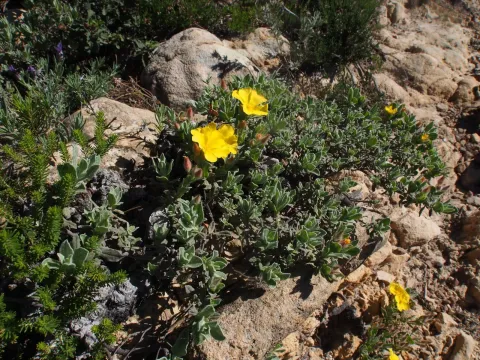
Woolly rock-rose
Halimium lasianthum
Halimium lasianthum, commonly known as woolly rock-rose, is a beautiful evergreen shrub belonging to the Cistaceae family. It is native to the Iberian Peninsula and is highly valued for its striking yellow flowers with dark markings.
What the section contains
Woolly rock-rose
The plant thrives in well-drained, sandy, or rocky soils with a neutral or slightly acidic pH. Excellent drainage is non-negotiable, as the roots are highly susceptible to rot when kept in consistently damp conditions.
Climate preferences include full sun exposure and protection from harsh, drying winds. It is ideally suited for Mediterranean-like climates and requires winter protection or sheltered positions in colder temperate zones.
Maintenance is relatively simple: once established, the woolly rock-rose is extremely drought-tolerant and requires minimal supplementary watering. Annual pruning after flowering helps maintain a dense, bushy form and encourages future growth.
It is widely used in landscape architecture to populate rock gardens, gravel beds, and sunny slopes, where its natural habit complements other heat-loving species.
Root rot is the most common threat, primarily caused by poorly drained soils or overwatering. Incorporating gravel or coarse grit into the planting site is the best preventative measure against this issue.
Pests such as spider mites may occasionally infest the plant during prolonged dry and hot spells. Regular monitoring and, if necessary, the application of horticultural soap or acaricides can manage the population.
Fungal issues like powdery mildew can develop if the plant is situated in a location with poor air circulation. Ensuring adequate spacing between plants is essential for maintaining plant health.
Gray mold may affect the foliage during periods of high humidity. Removing affected branches and improving the microclimate around the plant effectively mitigates this risk.
Environmental stress, such as shade or excessive moisture, weakens the plant's natural defenses, making it significantly more susceptible to a wide range of opportunistic pathogens.