
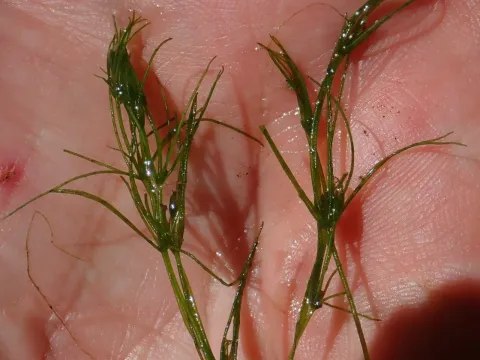
Chara globularis
Chara globularis
Chara globularis is not a traditional field crop but rather an aquatic macroalgae that requires specific substrate conditions for its establishment.
What the section contains
Chara globularis
Introduction into ponds is achieved by transplanting healthy thallus fragments or oospores into a muddy or sandy-silty substrate on the pond bottom.
The optimal window for establishing new populations is during the spring season when water temperatures consistently exceed 12 degrees Celsius.
Success depends on the density of the planting, which should be distributed evenly across the bottom to ensure stable colonization and growth.
Specialized management involves monitoring water transparency, as this species is extremely sensitive to light limitation caused by turbidity.
Belonging to the Characeae family, this species thrives in clear, stagnant, or slow-moving freshwater environments with high alkalinity.
The thallus is distinctively calcified, meaning the plant absorbs calcium carbonate from the water, which necessitates high calcium levels for health.
Sunlight is the primary energy source for Chara globularis; therefore, it requires clear water columns with minimal phytoplankton competition.
Optimal growth occurs at a pH level between 7.0 and 8.5, which facilitates the calcification process necessary for the structural integrity of the plant.
The species is a reliable biological indicator, often signalling high water quality and an absence of significant industrial or agricultural pollution.
Yield is measured in terms of biomass production per square meter of the pond bottom, which varies based on nutrient availability and light levels.
In optimal conditions, the species forms dense, carpet-like submerged meadows that significantly contribute to the primary production of the aquatic ecosystem.
The biomass serves as a food source for aquatic invertebrates and specific fish species, making it valuable for integrated aquaculture systems.
Harvested biomass is sometimes used as a calcium-rich organic fertilizer, providing essential minerals to nearby soil-based crops.
Yield stability is high in mesotrophic ponds, but excessive nutrient input often causes the decline of the species due to competition from other plants.
Eutrophication is the primary threat to the survival of Chara globularis, as excess nutrients encourage the growth of invasive algae and cyanobacteria.
Epiphytic algae growing on the thallus surface can block essential sunlight, leading to photosynthesis failure and the subsequent death of the stonewort.
Physical disturbances, such as dredging or heavy boat traffic, can destroy colonized areas and take years for a full recovery to occur.
Increased water turbidity from sediment runoff poses a severe risk, reducing light penetration and stifling the growth of the algae.
While major pests are not documented, environmental stress can trigger decay processes that make the plant vulnerable to pathogenic microbial outbreaks.
Harvesting is typically conducted using mechanical methods, such as bottom rakes or specialized nets, during the peak growth period in late summer.
Collected material must be thoroughly rinsed to remove sediment, debris, and associated aquatic organisms before further processing.
Drying the biomass should be done under shade in well-ventilated areas to maintain the integrity of the mineral-rich cellular structure.
Proper storage is essential; the dried material should be kept in a low-humidity environment to prevent mold growth and maintain its quality as fertilizer.
Routine harvesting can prevent the over-accumulation of organic matter in ponds, thereby maintaining the balance of the aquatic environment.