
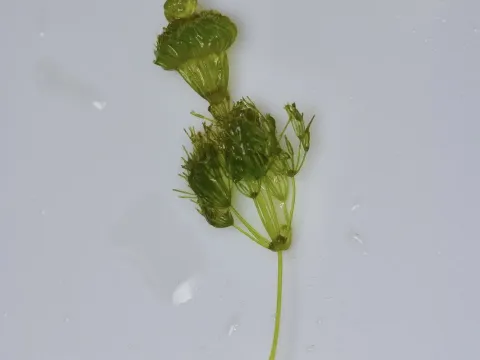
Nitella
Nitella
Nitella is a genus of macro-algae belonging to the Characeae family. These organisms are highly developed algae that inhabit freshwater environments across the globe, often forming dense submerged meadows in various types of wetlands, ponds, and slow-moving streams.
What the section contains


Nitella
Botanically, Nitella is known for its complex structure which resembles higher plants, consisting of a central axis with whorls of branches at the nodes. Unlike vascular plants, they lack true roots and instead rely on rhizoids for anchoring into the substrate.
The environmental requirements for Nitella are quite specific, as they are highly sensitive to water quality. They flourish in clear, nutrient-poor or moderately nutrient-rich waters where sunlight penetration is high, allowing for active photosynthesis throughout the plant's length.
These algae play a crucial role in aquatic ecology by providing oxygen and acting as a habitat for various aquatic micro-fauna. They are also considered excellent bio-indicators, as their presence or absence often signals the health and chemical status of a water body.
In terms of agricultural and pond management, Nitella is valued for its ability to stabilize sediments and clarify water. By competing for dissolved nutrients, they can effectively mitigate the impact of algae blooms caused by excessive nitrogen and phosphorus levels.
The most significant threat to Nitella populations is water eutrophication. The influx of agricultural runoff containing fertilizers promotes the excessive growth of phytoplankton, which significantly reduces light availability and leads to the eventual collapse of Nitella beds.
Additionally, the exposure to herbicides and pesticides commonly used in nearby farming operations is lethal to these algae. Physical disturbances, such as dredging or intense boat traffic, can also cause fragmentation and degradation of these delicate underwater plant communities.