
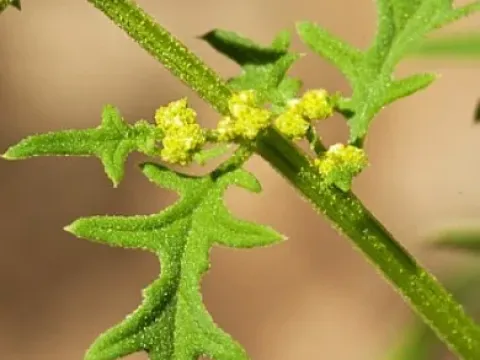
Chenopodium incisum
Chenopodium incisum
Chenopodium incisum is an herbaceous plant belonging to the Amaranthaceae family. As an annual species, it typically germinates when soil temperatures reach stable, warmer levels during the spring season.
What the section contains
Chenopodium incisum
Effective sowing involves shallow planting, as the seeds are small and require minimal soil coverage to ensure adequate light exposure for germination. The field should be well-tilled to facilitate root establishment.
Early stage development is characterized by rapid leaf production, which helps the crop compete effectively for space and sunlight if planted at the correct density.
Row spacing is typically set based on regional equipment capabilities, usually ranging between 30 to 50 centimeters, allowing for potential mechanical weeding during early development.
The plant demonstrates high adaptability to varied sowing dates, provided that moisture levels in the topsoil are sufficient to trigger the initial sprouting process.
This crop thrives in sunny environments with well-draining, light-textured soils. It is particularly valued for its drought tolerance, which is a key trait of species originating from arid and semi-arid regions.
While not overly demanding regarding soil fertility, the plant performs best in neutral to slightly alkaline pH environments. It avoids waterlogged areas, which can easily cause root stress or decay.
Temperature requirements are moderate; the plant is well-suited to regions with warm days and cooler nights. This diurnal fluctuation helps in the synthesis of specific secondary metabolites.
Minimal fertilization is usually sufficient, as the plant possesses an efficient nutrient uptake system. Over-application of nitrogen should be avoided to prevent excessive vegetative growth at the expense of quality.
Proper field management includes ensuring the soil structure remains loose and aerated throughout the growing season to support deep root penetration and plant stability.
The crop can be susceptible to various fungal diseases if environmental humidity remains high for extended periods, especially during the seedling stage.
Leaf-eating insects can pose a threat to the vegetative biomass, requiring integrated pest management strategies to protect the crop during critical growth phases.
Root-knot nematodes can potentially impact yields in infested soils, which necessitates strict adherence to crop rotation practices to break the pest life cycle.
Weeds represent a significant competitor for resources, particularly in the first few weeks post-emergence when the crop is still establishing its canopy.
Effective control measures include regular scouting and the use of approved agricultural practices that minimize chemical reliance while maintaining crop health.
Harvesting usually occurs when the plant reaches its full flowering stage, which is the optimal time for the highest content of active ingredients and biomass quality.
The stalks are harvested by cutting near the base, followed by rapid drying processes to prevent the fermentation or degradation of the plant material.
Shaded drying facilities with forced ventilation are ideal for maintaining the desired color and chemical integrity of the harvested foliage.
Mechanical harvesting equipment should be adjusted to minimize shattering of the leaves or seeds, ensuring maximum yield recovery during the collection process.
Post-harvest processing involves cleaning and grading the material to remove field debris and ensure the final product meets market standards for purity and quality.