
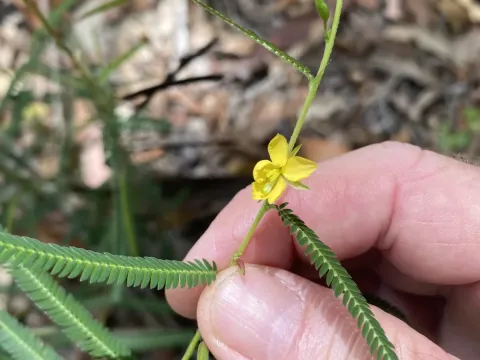
Chamaecrista nomame
Chamaecrista nomame
Chamaecrista nomame is a plant belonging to the Fabaceae family. Depending on the local climate and agricultural goals, it can be managed as either an annual or a short-lived perennial herbaceous crop.
What the section contains
Chamaecrista nomame
For optimal germination, seeds should be sown when the soil temperature consistently reaches 18-20 degrees Celsius. Planting should be timed to avoid any risk of frost, as seedlings are highly sensitive to cold weather.
The seeds possess a hard seed coat, making scarification a beneficial practice to improve uniform emergence. Seeds are typically sown at a depth of 1-2 centimeters in well-tilled, loose soil beds.
A standard planting density involves maintaining 40-50 centimeters between rows. This spacing is essential to ensure adequate sunlight exposure and effective airflow, which reduces the risk of fungal diseases.
Seedlings usually emerge within 10-14 days under favorable moisture conditions. It is crucial to prevent the formation of a surface soil crust, which can physically impede the emergence of young sprouts.
The crop thrives in light, well-draining sandy or loamy soils with good aeration. Waterlogging is particularly detrimental, as the plant's root system is susceptible to decay if exposed to stagnant moisture for too long.
The ideal soil pH range for Chamaecrista nomame is between 6.0 and 7.0. Preparing the field with moderate organic amendments before sowing helps jump-start vegetative growth, which is vital for high yields.
Being a heat-loving species, it performs best in temperatures ranging from 22 to 30 degrees Celsius. In cooler climates, selecting sheltered, sunny fields is necessary to support vigorous development throughout the season.
While moisture is important, irrigation should be carefully managed to avoid over-saturation. The demand for water peaks during the active vegetative growth phase, but it should be reduced as the plant matures.
Regular weeding and inter-row cultivation are necessary, especially in the early stages of growth. Cultivation practices not only manage weeds but also improve soil aeration, promoting a healthier root environment.
The primary economic output is the aerial biomass, which is harvested for its specific chemical properties. The yield is strongly influenced by consistent sunlight and the absence of weed competition during the peak summer months.
Harvested material undergoes specialized drying processes to ensure the stability of its chemical profile. Maintaining precise temperature control during drying is essential to protect the bioactive compounds within the plant.
As a source of lipase inhibitors, the crop is highly sought after by the pharmaceutical and supplement industries. Production success is determined by managing plant density and the timing of the harvest to maximize active constituents.
Under optimal conditions, the crop produces a significant amount of biomass by the end of the growing season. Efficient production requires careful monitoring of growth phases to ensure harvest before the plant focuses energy on seed production.
Quality control begins in the field; timely harvesting ensures that the leaves and stems are collected when the concentration of beneficial substances is at its highest, thereby maximizing the product's value.
The crop is susceptible to common legume diseases, such as Fusarium wilt and various bacterial infections. These issues are often exacerbated by poor drainage and the failure to rotate crops, leading to pathogen buildup in the soil.
Pests, particularly sap-sucking insects like aphids, can cause significant damage by feeding on young foliage. Regular field scouting is necessary to identify and manage pest populations before they cause widespread harm.
Weeds are the primary competitor for resources, particularly during the early vegetative stage. Effective weed management strategies are critical to ensure that the young crop is not suppressed during its initial growth phase.
Prevention involves using certified healthy seeds and maintaining appropriate field spacing. Implementing a robust crop rotation plan is essential to minimize the risk of soil-borne pathogens common to the Fabaceae family.
Given the plant's use in health products, the application of chemical pesticides is strictly regulated or limited. Integrated pest management, including biological control, is the preferred strategy for maintaining crop health.
Harvesting should be conducted in dry, sunny conditions to ensure that the biomass does not spoil during storage. Mechanized harvesting is viable for larger fields if cutting equipment is properly calibrated.
The harvested material must be moved to processing facilities immediately. Allowing cut biomass to pile up can lead to overheating and fermentation, which destroys the delicate compounds that give the plant its commercial value.
Primary processing involves cleaning the biomass to remove dust, weeds, and debris. High purity is required to meet the rigorous quality standards expected by the pharmaceutical processing industry.
Drying is performed in controlled environments, ensuring temperatures remain below 45 degrees Celsius. Good ventilation throughout the drying process is critical to preventing mold and preserving the chemical integrity of the crop.
Once dried, the product is stored in moisture-proof, light-shielded packaging. This ensures the shelf-stability of the material, protecting it from humidity and oxidative degradation until it reaches the end user.