
Polycarpon polycarpoides
Polycarpon polycarpoides
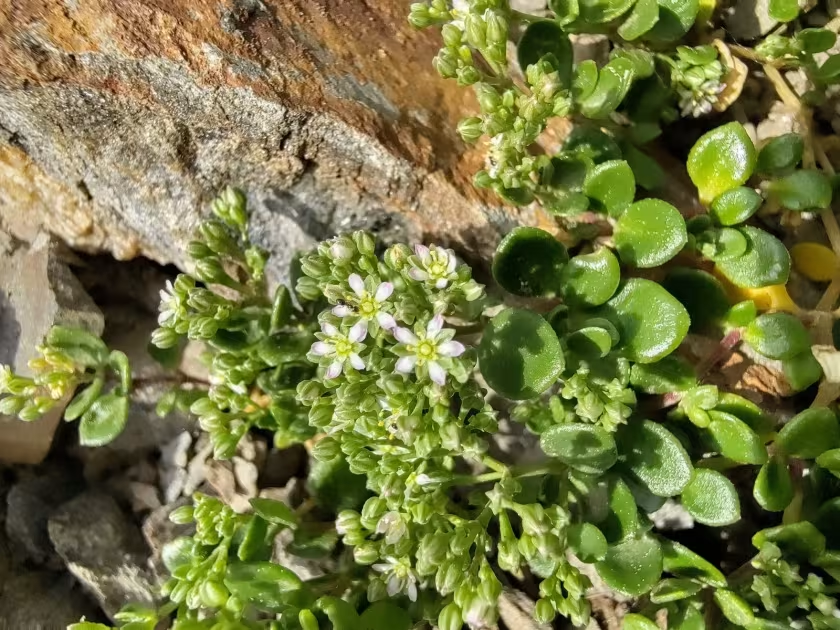
Description
Growing requirements
Polycarpon polycarpoides is a member of the Caryophyllaceae family, commonly associated with the flora of the Mediterranean basin and arid regions. It is recognized for its ability to thrive in challenging environmental conditions where water availability is highly limited.
This plant prefers well-drained, sandy, or rocky soils, showcasing remarkable adaptation to low-nutrient substrates. Its ecological niche includes disturbed areas and stony ground, where it acts as a hardy pioneer species capable of surviving high solar radiation.
Botanically, the species presents a branched growth habit with small, opposite leaves and dense inflorescences. This structural configuration is an evolutionary response to drought, helping the plant maintain physiological integrity during hot, dry growing seasons.
While not a traditional commercial crop, it holds interest for agronomists focused on land rehabilitation and erosion control. Its resilience makes it a subject of study for projects requiring vegetation cover in harsh, unproductive environments.
The agronomic management of such species relies on minimal intervention, as they are evolved for low-input systems. The plant exhibits high salt tolerance, allowing it to colonize saline habitats that are often unsuitable for conventional agricultural crops.