
Robbairea
Polycarpon robbairea
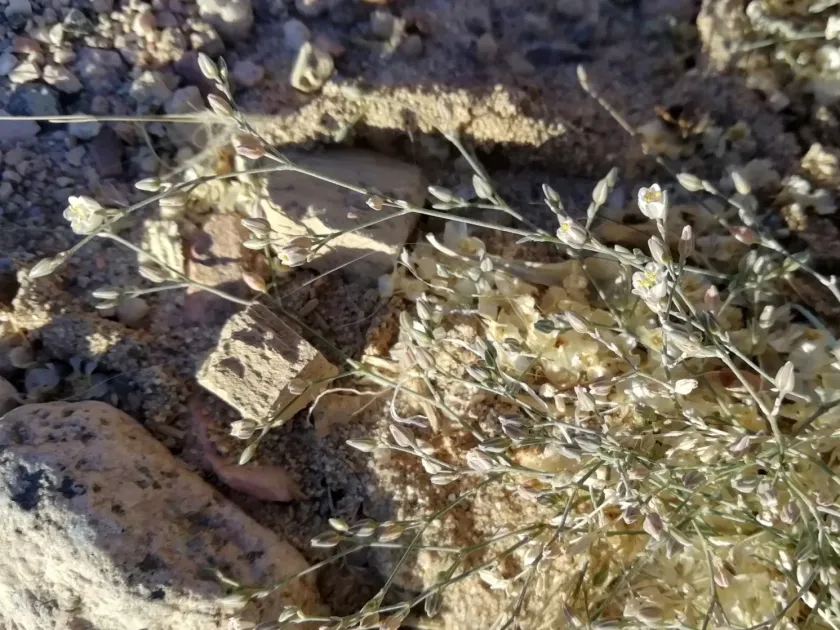
Description
Sowing dates
Robbairea is a member of the Caryophyllaceae family, recognized for its extreme resilience in arid and semi-arid environments.
The sowing process requires sandy or gravelly soils with very low organic content, typical of its native desert habitats.
Seed depth must be shallow to allow the plant to emerge quickly following the first seasonal rains, which serve as the primary germination signal.
Planting density is adjusted based on the objective: for soil stabilization, higher density is preferred, while for botanical propagation, spacing is increased.
The crop's establishment phase is delicate, requiring the soil to be moist but not saturated during the initial germination and root development cycle.
Growing requirements
Full sun exposure is a mandatory requirement for Robbairea, as the plant cannot tolerate shading and requires high light intensity for photosynthesis.
Soil structure should be predominantly loose and aerated; compacted soils impede the expansion of the taproot, which is crucial for water uptake.
The plant is highly salt-tolerant, making it a viable candidate for land restoration projects in saline environments where standard crops fail.
Climate adaptability is one of its primary strengths, as it thrives in high temperatures that would desiccate more conventional agricultural species.
Minimal fertilization is required, as the plant is adapted to nutrient-poor soils and may suffer from root toxicity if mineral fertilizers are overused.
Main diseases and pests
The most significant threat to the crop is root rot, induced by waterlogging or poor drainage during unusually wet weather patterns.
Pests are generally not a major concern; however, localized locust outbreaks can cause severe damage to the plant's vegetative structure.
Fungal pathogens may emerge in microclimates with restricted airflow, particularly if the plant is grown in dense, unmanaged colonies.
Competing weeds can outgrow the plant in its early development stages, necessitating manual weeding to ensure the survival of the seedlings.
Disease prevention is primarily achieved by site selection, ensuring the soil profile allows for rapid moisture dissipation after rain events.