
Purple sandwort
Arenaria purpurascens
Description
Growing requirements
Purple sandwort (Arenaria purpurascens) is a small perennial plant belonging to the Caryophyllaceae family. It is native to the mountain regions of Europe, specifically the Pyrenees, where it grows in rocky crevices and alpine meadows.
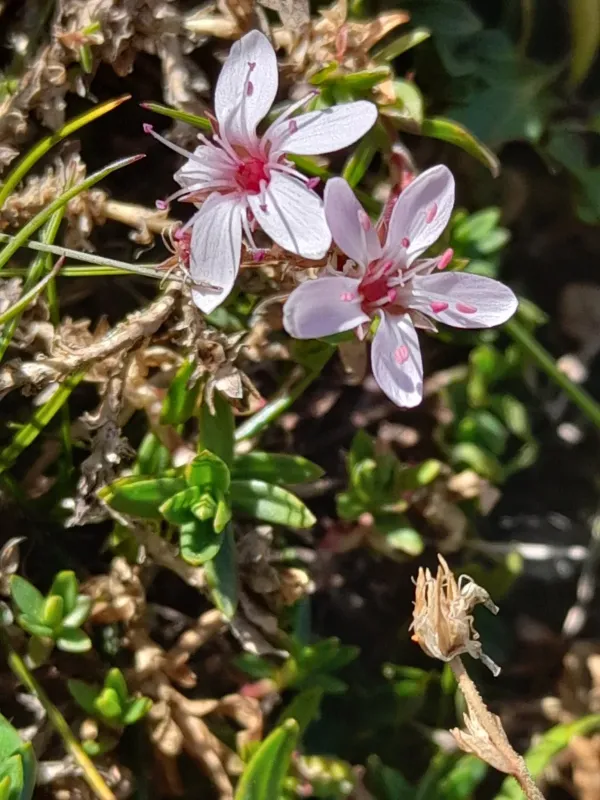
Botanically, this species is defined by its compact, low-growing habit and delicate purple-pink flowers. It forms dense mats of fine foliage that stay green throughout the growing season, making it an excellent choice for rock gardens and borders.
The plant requires well-drained, porous soil to thrive. It is highly intolerant of waterlogged conditions, which can lead to rapid root decay. Adding grit or sand to the planting site is recommended for better drainage.
It prefers full sun to light shade. While it is hardy in alpine environments, providing partial protection from the intense heat of the afternoon sun can help maintain the plant's health and promote more vigorous flowering.
Cultivation practices are simple but require attention to weeding. Since the plant is small and slow-growing compared to typical garden weeds, it must be kept free of competition to ensure proper air circulation and growth.
Main diseases and pests
Root rot caused by stagnant water is the primary disease concern for Arenaria purpurascens. Proper soil preparation is the most effective way to prevent fungal pathogens from attacking the root system.
Slugs and snails are the most common pests, as they are attracted to the soft foliage of the plant. Barriers or manual control are necessary during the early stages of spring growth to protect the plant from damage.