
Polycarpon prostratum
Polycarpon prostratum
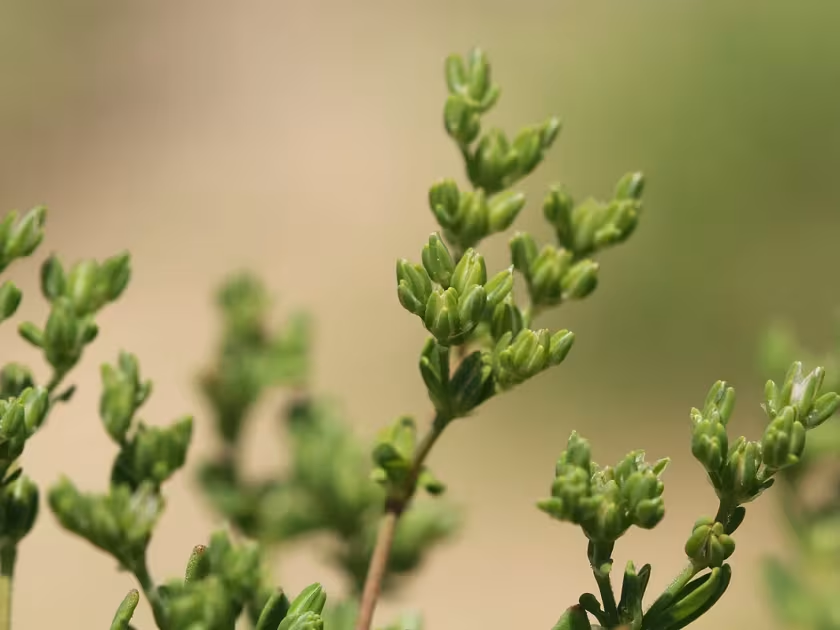
Description
Sowing dates
Polycarpon prostratum is an annual or biennial herbaceous plant belonging to the Caryophyllaceae family. Its seeds typically germinate in early spring when soil temperatures reach stable positive values, signaling the beginning of the growing season.
For agricultural purposes, seeds should be sown on the soil surface because they are very small and require light for optimal germination. The ideal period for sowing is in April, once the danger of late frost has passed, ensuring favorable conditions for seedling establishment.
The plant features a basal rosette that develops into numerous sprawling stems, which efficiently cover the soil surface. Due to high germination energy, it quickly establishes itself in prepared seedbeds, creating a dense mat.
When cultivating, it is essential to prepare a fine-textured seedbed to ensure uniform distribution. Since the seeds are minute, shallow placement or simple pressing into the soil is recommended to avoid burying them too deep, which would inhibit emergence.
The crop is highly effective at regenerating via self-seeding. In controlled production, maintaining a specific spacing is key to ensuring that the canopy develops properly without overcrowding, which could lead to unwanted humidity issues.
Growing requirements
This species thrives in light, well-drained sandy or sandy-loam soils. It is particularly sensitive to waterlogging, so selecting sites with excellent drainage is crucial to prevent root decay and promote healthy growth.
Polycarpon prostratum requires full sun exposure and does not tolerate shade from taller plants or structures. Exposure to direct sunlight is vital for the plant to maintain its low-growing, dense habit and for optimal photosynthetic activity.
It adapts well to moderate climates with temperatures ranging between 20–25 degrees Celsius during the active growth phase. While the plant has some drought tolerance once established, consistent soil moisture improves overall vegetative biomass significantly.
The soil should have a neutral to slightly acidic pH for best results. Although it does not require high levels of organic matter, providing minimal mineral fertilization, particularly nitrogen, encourages rapid leaf development on poorer substrates.
Effective management involves early-stage weed control, as the young seedlings are vulnerable to competition. Once established, the dense growth of the plant usually suppresses most common annual weeds.
Yield
The yield of Polycarpon prostratum is measured by the total volume of vegetative mass, which holds potential for pharmacological applications. Productivity is maximized through consistent moisture management and adequate spacing.
Under irrigation and appropriate nutrient management, the plant can produce a significant amount of biomass per hectare. This makes it a viable candidate for ground-cover usage in orchards or as a specialty medicinal crop.
Harvesting for commercial use should coincide with the peak flowering stage. During this time, the concentration of biologically active compounds is at its highest, ensuring a high-quality final product for processing.
Seed production is prolific, with individual plants capable of producing thousands of seeds. This high reproductive rate allows for easy succession in farming but also requires careful harvest timing to prevent significant seed loss through natural dispersal.
Overall economic performance depends on efficient harvesting techniques and the ability to maintain the purity of the harvested biomass. The plant's fast growth rate allows for successful multi-cycle management within a single growing season.
Main diseases and pests
The primary threats to this culture are fungal diseases, particularly those related to soil moisture management, such as Fusarium root rot. These pathogens thrive in poorly drained areas with restricted air circulation.
Pests such as aphids and spider mites can cause damage, especially during dry spells. These organisms sap the vitality of the plant, potentially causing stunted growth and reducing the overall quality of the harvested biomass.
Disease management focuses on preventive measures, including crop rotation and ensuring that the soil does not stay saturated for long periods. Reducing plant density can also improve air movement, which limits fungal proliferation.
Weed competition is the most significant challenge during the initial weeks of development. If weeds are not removed promptly, they will easily overwhelm the young Polycarpon seedlings, leading to crop failure.
- Maintain soil drainage to prevent fungal rot.
- Monitor for sap-sucking pests during peak seasons.
- Hand-weed or use precision tools during early development.
- Implement strict rotation to minimize soil-borne pathogens.
- Use certified seeds to prevent the introduction of weeds or diseases.
Harvesting
The harvesting process should be executed during the peak of the flowering period. The plants are typically cut a few centimeters above the ground, ideally on a dry day to minimize moisture content in the raw material.
Immediately after cutting, the biomass must be transported to a drying facility. It is important to spread the plant material thinly to prevent fermentation or molding, which can occur very quickly in dense, moist piles.
Drying is performed in shaded, well-ventilated conditions or controlled-temperature dehydrators. Keeping the temperature below 40 degrees Celsius is critical to protecting the delicate chemical profile of the plant tissue.
For seed collection, stems are harvested as the capsules turn brown but before they shatter. The collected material is then threshed and cleaned using air-screen systems to remove chaff and debris.
The final product should be stored in a cool, dry, and dark environment to maintain its potency. Proper moisture control during storage is essential to prevent degradation and extend the shelf life of the harvested material.