
Abelia schumannii
Abelia schumannii
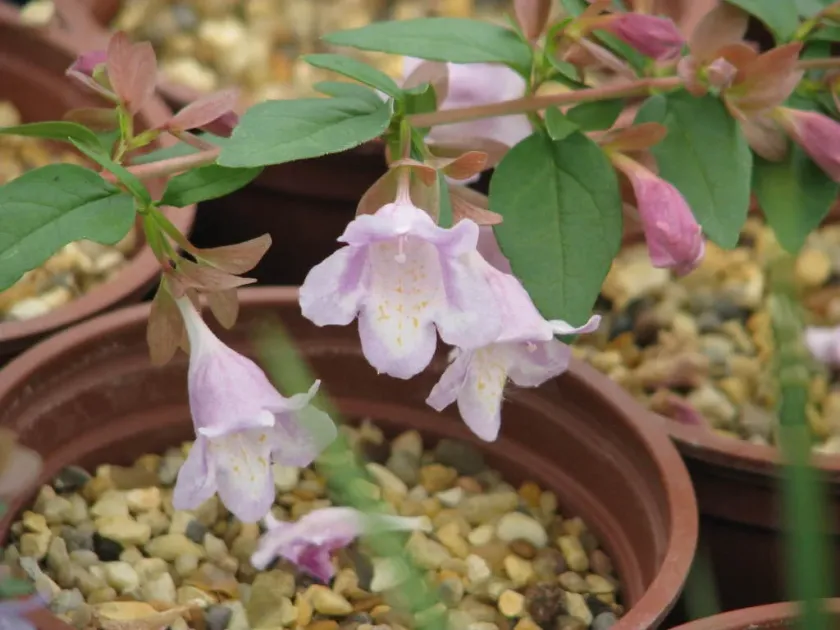
Description
Growing requirements
Abelia schumannii is an ornamental shrub belonging to the Caprifoliaceae family. Native to China, this species is highly valued for its arching branches and profuse display of bell-shaped pinkish-lilac flowers that bloom throughout the summer.
For optimal growth, Abelia schumannii requires a sunny position with light afternoon shade to protect the foliage from scorching. It thrives best in regions with mild climates, as it can be sensitive to severe frosts and may require winter protection.
The ideal soil is rich, well-draining, and slightly acidic. It is crucial to avoid heavy or waterlogged ground, as the root system is prone to rot. Incorporating organic matter such as compost into the planting hole helps improve structure.
Maintenance includes consistent watering during dry spells and a balanced application of fertilizer in early spring. Pruning should be performed after the main flowering cycle to maintain the plant's elegant shape and encourage new growth.
This shrub is versatile in garden design, making it an excellent candidate for foundation plantings, mixed borders, or containers. Its elegant habit adds vertical interest to the landscape without dominating smaller companion plants.
Main diseases and pests
Abelia schumannii is generally robust, but it can be susceptible to powdery mildew under conditions of poor air circulation and high humidity. Proper spacing between plants is essential to mitigate this risk.
Common pests include aphids, scale insects, and spider mites. These pests typically cluster on the tender tips of new growth, causing curling leaves and reduced plant vigor if left unchecked during the growing season.
Effective pest management involves using horticultural oils or systemic insecticides when an infestation is detected. Regular monitoring of the undersides of the foliage is recommended to catch issues early.
Fungal infections can be treated with approved fungicides. Maintaining a clean garden environment by removing fallen debris helps reduce the population of potential pathogens and over-wintering pests.
Overall, a well-nourished and correctly pruned plant is significantly more resistant to disease. Providing the right environmental conditions remains the most effective defense against the majority of biotic threats.