
Umbrella abelia
Abelia umbellata
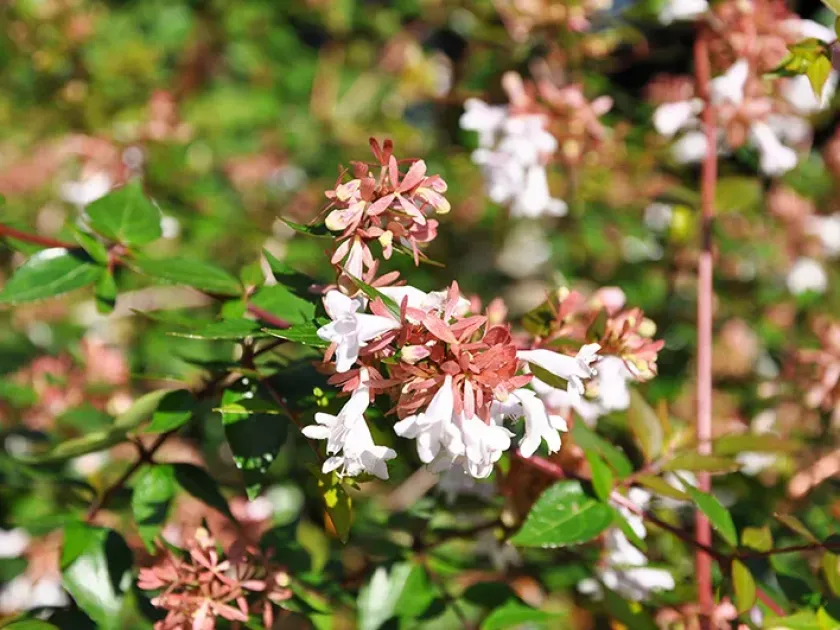
Description
Growing requirements
Umbrella abelia, scientifically known as Abelia umbellata, is a decorative shrub belonging to the Caprifoliaceae family. Originating from the mountain regions of China, this plant is valued for its unique inflorescence and elegant foliage.
Successful cultivation requires fertile, well-drained soil with a neutral or slightly acidic pH. The plant thrives in sunny locations but benefits from some protection against strong, drying winds in colder zones.
The agrotechnical requirements include consistent watering during the growing season, especially during hot summer months. However, the soil must not be kept perpetually wet to avoid root suffocation.
Fertilization with a balanced, slow-release fertilizer in early spring helps support vigorous growth and dense flowering. Pruning should be performed after the flowering season to maintain the desired shape and size.
In landscaping, this species is frequently used in mixed borders, as a low hedge, or as a standalone ornamental feature. Its structural beauty makes it a popular choice for structured garden designs.
Main diseases and pests
Umbrella abelia can be susceptible to powdery mildew, especially in environments with poor air circulation or high humidity. Early detection is key to preventing the fungus from spreading to the entire plant.
Aphids are the most common pests that target the soft, growing tips of the shrub. They can cause distorted leaf growth and stress the plant, making it more vulnerable to other diseases.
Root rot is a major threat caused by overwatering or poorly drained heavy clay soils. Ensuring proper soil preparation prior to planting is the most effective way to prevent this issue.
Integrated pest management, including regular manual inspection and the use of insecticidal soap when necessary, is recommended for maintaining plant health.
Sanitation practices such as removing fallen leaves and pruning dead wood help to minimize the buildup of pathogen spores around the base of the shrub during the dormant season.