
Glossy Abelia
Abelia hybrids
Description
Growing requirements
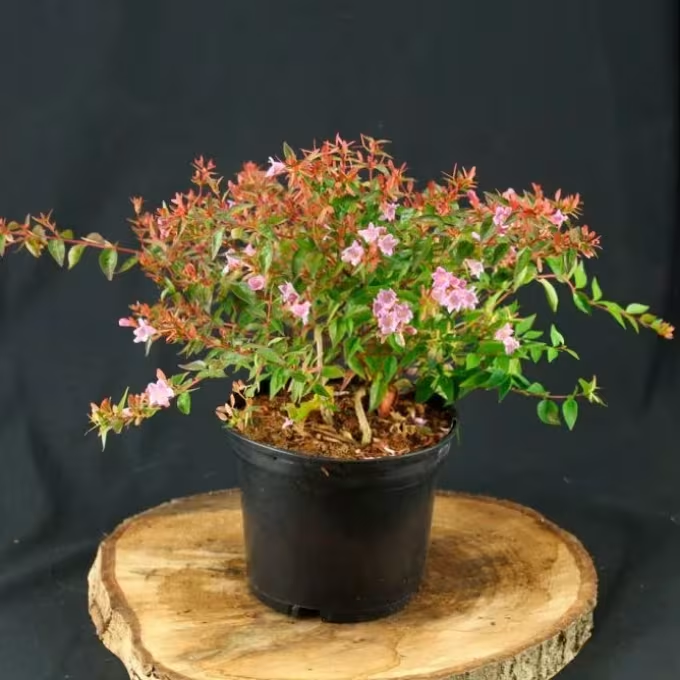
Glossy Abelia (Abelia × grandiflora) is a popular ornamental shrub belonging to the Caprifoliaceae family. It is a semi-evergreen plant characterized by arching branches, glossy leaves, and delicate, fragrant flowers that appear from late spring through autumn, providing extended aesthetic value.
This crop thrives in full sun to partial shade, requiring well-drained, fertile soil rich in organic matter. While it is adaptable, it performs best in slightly acidic to neutral soil conditions, avoiding heavy clay soils that retain excessive moisture and may lead to root suffocation.
Climate requirements for this plant are specific, as it is generally hardy in USDA zones 7 to 9. In colder regions, protection from harsh winds and freezing temperatures is necessary, as the plant can suffer significant tissue damage if exposed to prolonged frost without proper covering.
Agrotechnical maintenance includes consistent watering during the establishment phase and throughout dry summer periods. Fertilizer application, preferably a balanced slow-release formula, should be applied in early spring to support vigorous new growth and ensure an abundant floral display throughout the season.
In terms of usage, Abelia hybrids are highly valued for landscaping projects, including hedges, foundation plantings, and mass displays. Their ability to respond well to pruning makes them an excellent choice for formal garden structures as well as more naturalistic, wildlife-friendly landscaping designs.
Main diseases and pests
Common pests affecting Abelia hybrids include aphids and spider mites, which typically target the new, succulent foliage. Monitoring and early intervention with insecticidal soaps or neem oil can effectively control populations before they cause significant damage to the plant's structural integrity.
Powdery mildew is the primary fungal concern, often appearing as a white dusty film on the leaves during periods of high humidity. Proper spacing between plants and ensuring good air circulation are the most effective cultural practices to reduce the incidence and spread of this disease.
Root rot, often associated with poor drainage, can be fatal to the shrub. Avoiding over-irrigation and ensuring the planting hole has sufficient drainage material are critical steps in preventing soil-borne pathogens from compromising the root system during the dormant or wet season.
Leaf spots, while generally minor, can be managed by removing affected leaves and ensuring the area around the shrub is clean of organic debris. This sanitation practice reduces the overwintering capacity of fungal spores that could re-infect the plant during the following growing season.
Nutrient deficiencies, particularly iron or magnesium, may cause chlorosis, where leaves turn pale green or yellow while the veins remain dark. Soil testing and the application of micro-nutrients, along with adjusting the soil pH, are essential for restoring the plant's health and vibrant appearance.