
Musschia wollastonii
Musschia wollastonii
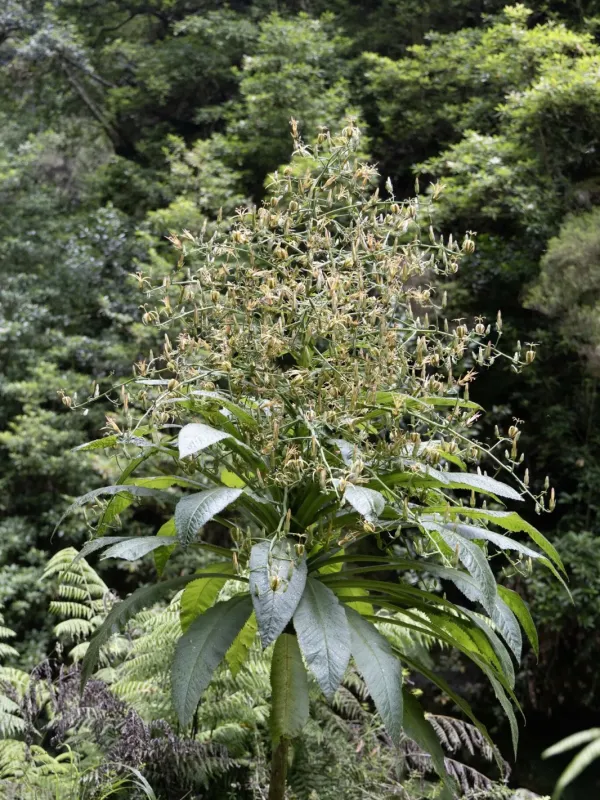
Description
Growing requirements
Musschia wollastonii is a remarkable species belonging to the Campanulaceae family. Native to the cliffs of Madeira, it is a monocarpic perennial that exhibits a unique growth habit, developing a large, fleshy basal rosette before producing a massive inflorescence.
The culture thrives in cool, humid environments that mimic its natural mountainous habitat. Temperature management is crucial; it requires stable, temperate conditions, as it is sensitive to both high heat and heavy frost, necessitating greenhouse or controlled environment cultivation.
Soil requirements focus heavily on porosity and drainage. A mixture composed of organic peat, pumice, and perlite provides the necessary structure to prevent compaction and ensure that the root system has adequate access to oxygen while retaining essential moisture.
Regarding light, Musschia wollastonii prefers bright, indirect sunlight. In indoor or greenhouse settings, providing filtered light prevents the burning of its broad leaves, which serve as the main photosynthetic engine for its impressive structural development.
Watering practices should be precise; the substrate should remain moist but never waterlogged. As an agricultural or high-value decorative crop, ensuring that the water is applied directly to the root zone without wetting the foliage is a fundamental rule of its agrotechnology.
Main diseases and pests
Root rot represents the most significant threat to this species in cultivation. It typically occurs when soil moisture levels are poorly managed, leading to a breakdown of root tissue and subsequent plant failure.
Fungal pathogens, particularly those triggered by stagnant air and excess humidity, can damage the leaves and central stem. Improving air circulation within the greenhouse is an essential preventative measure to maintain plant health.
Common greenhouse pests, including aphids and spider mites, can infest the tender growth of the inflorescence. These pests can rapidly proliferate if the microclimate remains dry and ventilation is insufficient.
Effective management requires a combination of integrated pest management (IPM) techniques and regular environmental monitoring. Using soft-chemical controls or biocontrol agents is preferred to preserve the integrity of the plant's delicate structures.
Finally, keeping the growing area clean and removing any decaying foliage prevents the buildup of pathogens, ensuring that the plant can focus its energy on its final, spectacular flowering phase.