
Moretti's bellflower
Campanula morettiana
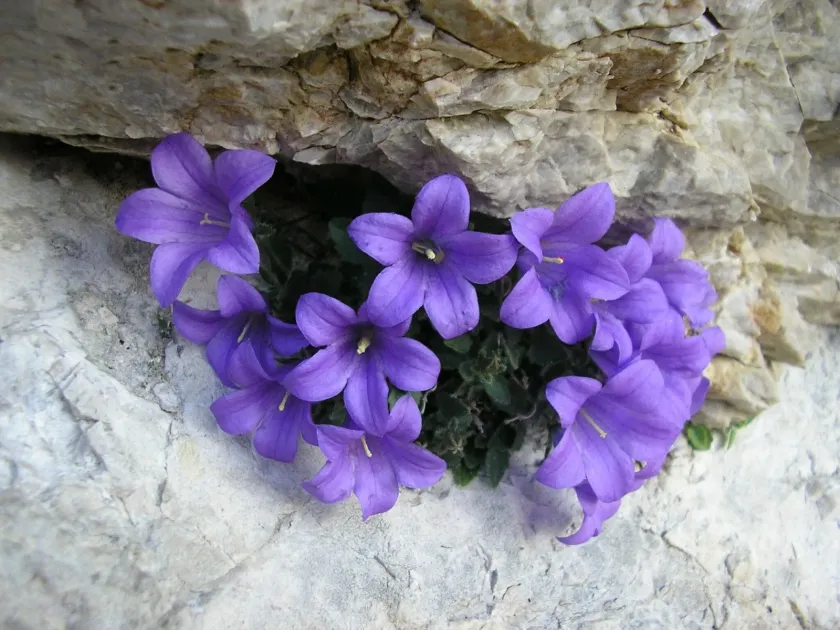
Description
Growing requirements
Moretti's bellflower (Campanula morettiana) is a rare perennial herbaceous plant belonging to the Campanulaceae family. It is a strict calcicole species, endemic to the limestone crevices of the Dolomite Alps in Northern Italy.
The plant is prized for its exceptionally slow growth rate and delicate, star-shaped flowers. It develops in small, dense cushions, making it a masterpiece for specialized alpine gardens and crevice gardening.
Agricultural success depends on mimicking its natural lithophytic environment. The soil must be highly inorganic, consisting mostly of limestone grit and gravel, which ensures rapid drainage and prevents any stagnant moisture.
Climate requirements for this culture include cool nights and protection from extreme, scorching midday sun. Good air circulation is vital, as the plant suffers quickly in stagnant or overly humid atmosphere conditions.
Maintenance involves precise watering techniques. During the active growing season, moisture should be provided in small, controlled amounts, while in winter, the plant should remain almost completely dry to prevent crown rot.
Main diseases and pests
Root and crown rot are the primary threats to Campanula morettiana. Excessive water accumulation in the substrate or around the neck of the plant almost inevitably leads to fungal decay.
Slugs and snails are the most dangerous pests, often decimating the small, fragile leaves overnight. Protecting the plants with physical barriers or targeted control measures is necessary during the humid spring season.
Aphids can occasionally infest the flower buds during periods of fast growth. Early detection and mechanical removal or gentle application of insecticidal soaps are recommended to keep the plant in good condition.
Nutrient deficiency or toxicity from chemical fertilizers can easily cause plant stress. It is strongly advised to use minimal or no traditional fertilizers, relying instead on the natural mineral content of the limestone substrate.
Overall, keeping the area around the base of the plant free of debris and ensuring perfect drainage are the most effective strategies to prevent infections and maintain a healthy, thriving colony.