
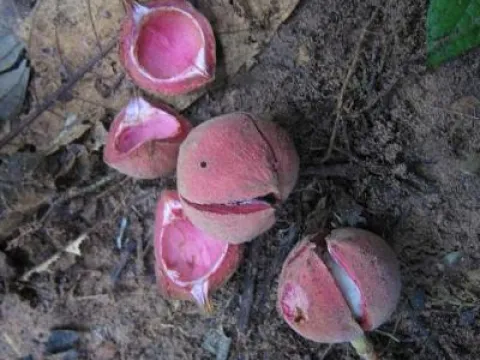
Tetragastris altissima
Tetragastris altissima
Tetragastris altissima is a prominent tree species belonging to the Burseraceae family. It is native to the tropical forests of the Americas, thriving particularly well in humid, lowland habitats where biodiversity remains high.
What the section contains
Tetragastris altissima
To cultivate this species successfully, one must provide a tropical climate characterized by high humidity and steady temperatures throughout the year. The species performs best in deep, fertile soils that allow for rapid root development.
Botanically, the tree is defined by its tall, straight trunk and a dense canopy of compound leaves. It possesses a complex root system adapted to stabilize the tree against strong winds and heavy rainfall typical of its habitat.
Agricultural practices for this timber crop involve careful spacing to ensure each tree receives adequate airflow. Early-stage development requires shielding from direct, intense equatorial sunlight to encourage a stronger initial growth pattern.
The timber derived from Tetragastris altissima is highly valued for its physical strength and natural durability. It is frequently used in high-quality furniture making and various construction projects where wood stability is critical.
The main threats to this species include fungal infections of the bark and vascular system, often exacerbated by waterlogging or poor soil drainage conditions in plantation settings.
Pests such as wood-boring beetles can cause significant economic loss by compromising the structural integrity of the timber. Integrated pest management strategies are essential for maintaining plantation health.
Ecological changes and deforestation pose a threat to the genetic diversity of the species, making sustainable plantation management a vital part of its preservation.
Proactive monitoring of the tree canopy and root zones is recommended to detect any signs of stress, whether biotic or abiotic, before they impact the harvestable yield.
Maintaining soil health through organic amendments helps boost the tree's natural defense mechanisms against common regional pathogens, ensuring steady growth cycles.