
Farsetia longisiliqua
Farsetia longisiliqua
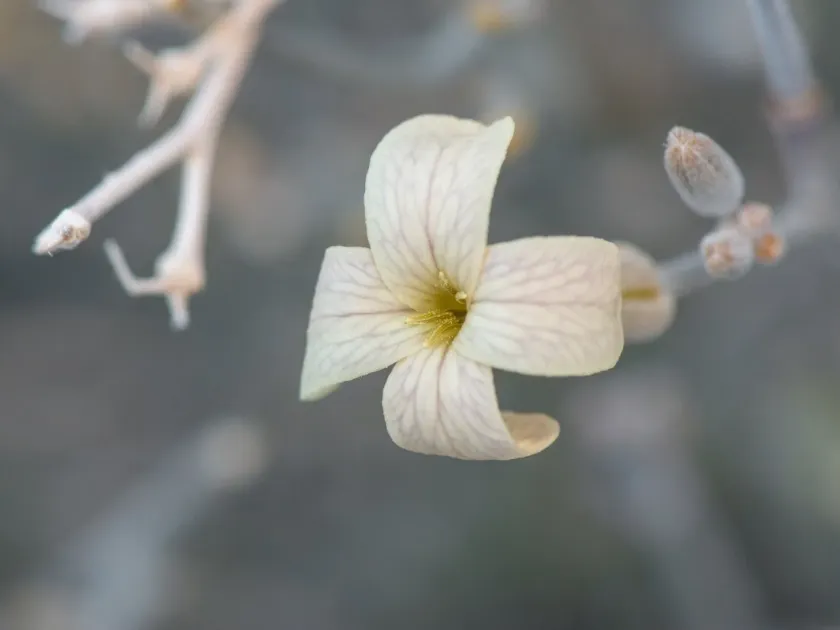
Description
Growing requirements
Farsetia longisiliqua is a perennial herbaceous plant belonging to the Brassicaceae (mustard) family. This species is native to arid and semi-arid regions, showing remarkable resilience to harsh environmental conditions.
The plant is biologically characterized by its ability to thrive in extremely dry soils, utilizing an extensive root system to access deep moisture. Its morphology includes narrow foliage and long, slender pods that protect the seeds from environmental stressors.
Successful cultivation requires well-drained soil, preferably sandy or loamy textures, to ensure proper aeration. The crop is highly sensitive to waterlogging, which necessitates careful site selection and avoiding heavy clay soils that retain excessive water.
Climate requirements for this species focus on high heat tolerance and the ability to withstand intense solar radiation. It is well-suited for cultivation in desert environments where other traditional crops typically fail to establish.
Optimal growth occurs during periods of moderate to high temperatures. The plant exhibits structural adaptations that minimize transpirational loss, making it a highly efficient water-user in arid agricultural systems.
Yield
The primary economic use of Farsetia longisiliqua is the extraction of oil from its seeds. This oil has potential industrial applications, contributing to the development of biofuels or specialized lubricants in arid zones.
Beyond seed production, the plant serves as a vital forage resource for livestock such as camels and goats in remote desert regions. Its ability to remain green during dry spells makes it an essential component of local pasture management.
Yield stability is dependent on management practices, particularly planting density and timing. Even without extensive irrigation, the crop provides a reliable source of biomass, which is a major advantage for farmers in water-scarce areas.
Harvesting strategies must account for the natural dehiscence of the pods. Early harvesting or the use of specialized machinery is recommended to prevent significant seed loss prior to gathering.
Future research into the domestication of this species is focused on improving its yield traits and oil quality. As a robust crop, it remains a focal point for sustainable agriculture development in arid climates worldwide.