
Farsetia stylosa
Farsetia stylosa
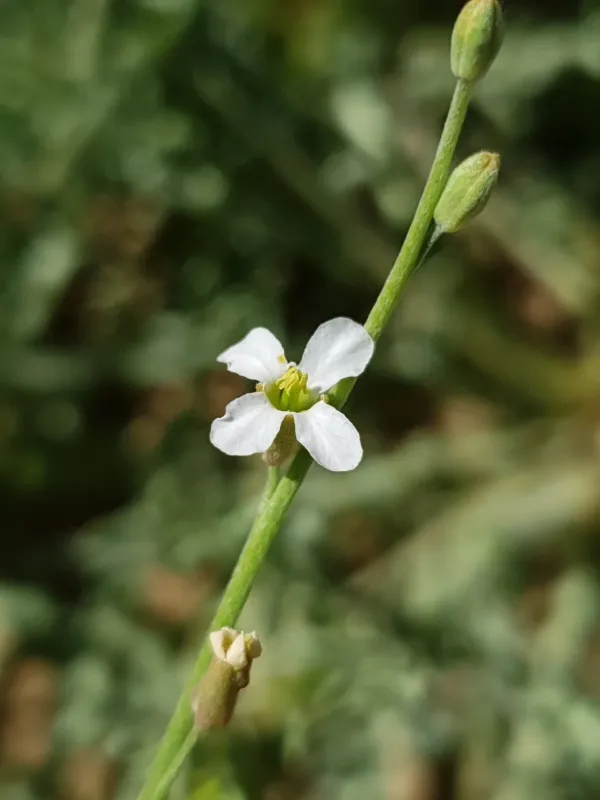
Description
Growing requirements
Farsetia stylosa is a perennial herbaceous plant belonging to the Brassicaceae family. In its natural habitat, the crop is adapted to harsh arid zone conditions, demonstrating high resistance to prolonged drought periods.
The plant prefers well-drained sandy or loamy soils typical of desert and semi-desert ecosystems. It possesses a deep, robust root system that allows it to access moisture from significant depths, which is a critical survival mechanism in regions with sparse rainfall.
The climate requirements for the crop include high solar radiation levels and tolerance to extreme diurnal temperature variations. Farsetia does not tolerate waterlogged soil, making effective drainage an essential practice to prevent root rot and ensure plant longevity.
Biologically, the crop is adapted to active growth during brief rainy periods. The optimal temperature range for development is between +20°C and +35°C, with the plant maintaining viability even under conditions of extreme heat typical for its natural range.
In agricultural practice, Farsetia stylosa is considered a potential resource for the restoration of degraded lands and as a component of pasture ecosystems in arid environments. Its seeds contain oils that are of interest for various industrial applications.