
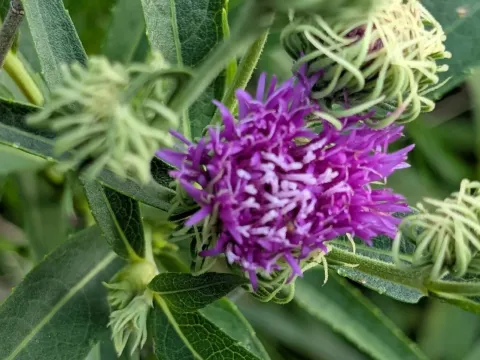
Vernonia arkansana
Vernonia arkansana
Vernonia arkansana, commonly known as Arkansas ironweed, is a robust herbaceous perennial belonging to the Asteraceae family. For successful propagation, seeds generally require a period of cold stratification to break dormancy before spring sowing.
What the section contains
Vernonia arkansana
Direct sowing in the open field is best performed in late autumn, allowing natural winter temperatures to prepare the seeds for spring germination. If starting indoors, use a well-draining soil mix and keep the containers in a brightly lit environment.
Seedlings develop steadily and should be spaced approximately 45 to 60 centimeters apart to accommodate their eventual mature size. The plant's root system is deep and vigorous, requiring sufficient space to establish effectively in the first season.
Early maintenance involves keeping the soil consistently moist until the young plants develop a strong root system. Once established, Vernonia arkansana displays excellent resilience and adaptability to various environmental conditions.
For large-scale cultivation, drilling at a shallow depth is recommended, as the seeds need light to trigger successful germination. Proper seed-to-soil contact ensures uniform emergence across the field, minimizing the need for manual replanting.
Arkansas ironweed flourishes in full sun, which promotes strong stems and vibrant, deep purple inflorescences. While it can tolerate partial shade, insufficient light often results in leaning stems and reduced flower production.
The plant performs best in fertile, moisture-retentive soils with neutral to slightly acidic pH levels. Although it prefers moist conditions, it is notably tolerant of summer heat once its deep taproot is well established.
Drainage is a critical factor, particularly during the dormant winter months. Waterlogged soil can lead to crown rot, so selecting a site that prevents standing water is essential for the longevity of the perennial clumps.
While Arkansas ironweed is relatively drought-tolerant, supplemental irrigation during prolonged dry spells will enhance the plant's overall health and the duration of its blooming period. This is especially true for plants grown in lighter, sandier soils.
Maintenance chores include annual mulching to regulate soil temperature and moisture. Fertilization is generally not required in rich soils, but a balanced organic compost application in early spring can boost vegetative growth.
Vernonia arkansana is highly valued for its ecological benefits, serving as a significant source of nectar for native pollinators, butterflies, and honeybees. Its late-season bloom makes it a critical food source before winter.
The plant produces abundant biomass that can be utilized in various environmental conservation projects. Research into the seed oil composition of Vernonia species highlights their potential utility in industrial applications.
Harvesting the seed heads requires attention to timing, as they mature gradually. Collecting them when the pappus begins to spread ensures that the seeds are fully developed and viable for future planting.
In a garden setting, regular deadheading is recommended if self-seeding is undesirable. Removing spent blooms early can also encourage a more tidy appearance and potentially stimulate a secondary, albeit smaller, flush of flowers.
Total productivity is high in terms of aesthetic value and pollinator support. The plant remains a staple in naturalistic meadow plantings and prairie restorations where its hardiness is a distinct advantage.
Vernonia arkansana is inherently resistant to most garden pests and diseases. However, in poorly ventilated or excessively humid conditions, powdery mildew can occur on the foliage during the mid-summer months.
Aphids occasionally colonize the soft, new growth in spring. In most cases, these infestations are controlled by natural predators, and chemical intervention should be avoided to protect the bees that frequent the flowers.
Root rot is the most serious threat, typically resulting from overly compact or saturated soil. Ensuring good soil structure and slope for water runoff is the most effective preventative measure against this physiological issue.
Rust diseases are infrequent but can appear if planting density is too high. Providing adequate airflow and keeping the base of the plant free of debris helps to significantly lower the risk of fungal infections.
Good agricultural hygiene, such as removing dead plant matter in late autumn, helps break the disease cycle and discourages overwintering of pathogens, ensuring the health of the plants for the following growing season.
When harvesting for cut flowers, stems should be cut when at least half of the florets in the cluster are open. This stage provides the best visual appeal and longevity for floral arrangements.
Seed harvesting should be performed in dry conditions to prevent mold growth on the collected material. Threshing and cleaning the small seeds requires careful handling to ensure high purity and quality of the stored lot.
In late autumn, after the first hard frost, the stalks should be cut back to roughly 10 centimeters above the ground. This practice tidies the landscape and prepares the plant for a healthy emergence the following spring.
Storage of harvested seeds must occur in a cool, dry place to maintain maximum viability. Using breathable containers like cloth bags or paper envelopes prevents moisture build-up during long-term storage.
For industrial or large-scale seed collection, modified combine headers are necessary to capture the light seeds before they are dispersed by the wind, ensuring maximum yield of the propagation material.