
Verbesina turbacensis
Verbesina turbacensis
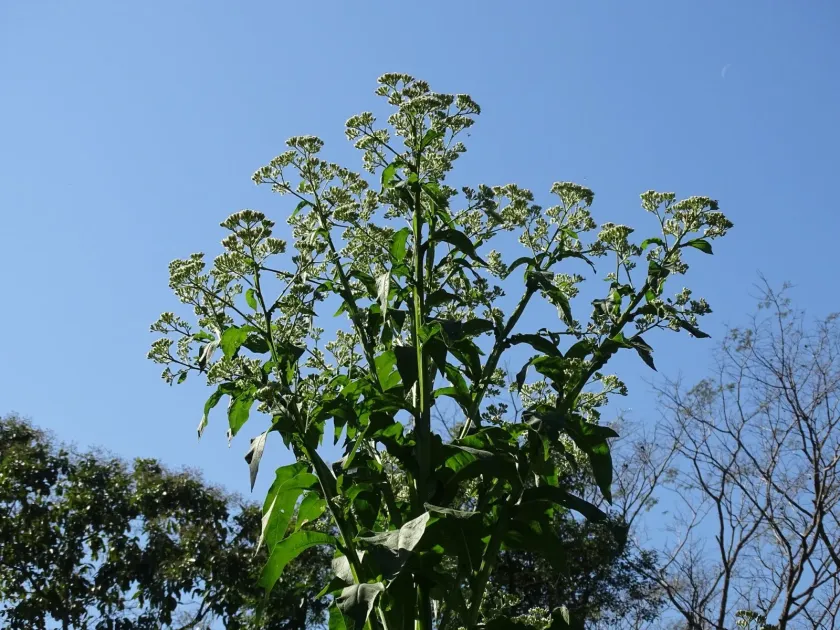
Description
Sowing dates
Verbesina turbacensis is a warm-season crop that requires stable, frost-free weather for successful germination and early development. Sowing should only occur when soil temperatures consistently reach at least 20 degrees Celsius.
Seeds should be planted at a shallow depth of 1-2 centimeters, as they require significant light exposure to initiate the germination process. A well-prepared seedbed with fine, loose soil particles is essential for optimal stand establishment.
Row spacing is typically recommended at 45 to 60 centimeters to facilitate mechanical weeding and ensure adequate airflow between plants. Denser plantings often lead to etiolated stems that are highly susceptible to lodging.
Uniform seed distribution is key to maintaining a consistent crop density. Using high-quality, viable seeds ensures rapid emergence, which is critical for the crop to compete effectively with early-season weeds.
Post-emergence thinning may be necessary if the seeding rate was high. Maintaining a consistent distance between individual plants supports structural integrity and allows for even resource distribution across the field.
Growing requirements
This crop belongs to the Asteraceae family and is recognized for its adaptability to various tropical environments. It thrives in regions characterized by abundant sunlight and moderate rainfall patterns throughout the growing season.
The plant prefers well-drained, fertile soil, ideally with a loamy texture. It does not tolerate waterlogging, which frequently leads to root system stress and secondary pathogen colonization in the root zone.
Temperature management is crucial, as the plant grows optimally in the range of 22 to 28 degrees Celsius. Extreme cold or frost will result in immediate tissue necrosis, effectively ending the plant's life cycle prematurely.
Regarding sunlight requirements, it is a heliophilous species. Exposure to full sunlight is necessary to maximize the production of vegetative biomass and ensure the plant reaches its full physiological potential.
Soil nutrient status should be monitored regularly, as the plant is responsive to balanced N-P-K applications. However, excessive nitrogen fertilization should be avoided to prevent over-succulent growth that attracts pests.
Main diseases and pests
Aphid infestations represent a primary threat to Verbesina turbacensis, particularly during periods of rapid leaf development. These insects cause sap depletion and can transmit viral diseases across the field.
Powdery mildew is a significant fungal threat, especially in environments with high humidity and stagnant air. Implementing proper plant spacing and airflow management is the most effective cultural control method.
Root rots caused by soil-borne pathogens are common in poorly drained soils. Careful monitoring of irrigation practices is essential to prevent saturation and ensure that the root zone remains sufficiently aerated.
Weed competition poses a severe challenge, especially during the first few weeks after emergence. Timely mechanical cultivation is necessary to protect the relatively slow-starting seedlings from being overwhelmed by aggressive weeds.
Integrated pest management (IPM) strategies, including the use of trap crops or beneficial insect populations, are recommended to maintain field health without excessive reliance on synthetic chemical inputs.