
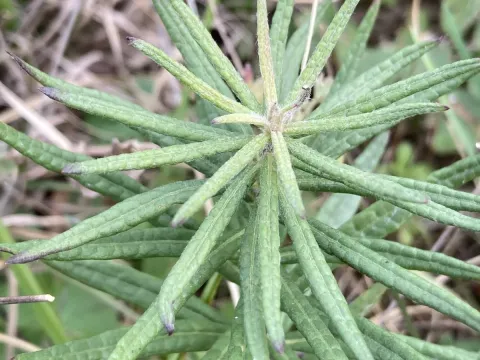
Vernonia intermedia
Vernonia intermedia
Sowing of Vernonia intermedia should be conducted in the spring once the soil temperature at seeding depth reaches 12-15 degrees Celsius. This timing ensures rapid germination and helps avoid the risks associated with late spring frost events in the growing region.
What the section contains
Vernonia intermedia
The seeds are small and require shallow planting, typically at a depth of 1-2 centimeters. Achieving good seed-to-soil contact is essential for uniform emergence, which is best ensured by firming the soil with a roller immediately after the sowing operation.
A row spacing of 45-60 centimeters is recommended for mechanical cultivation and optimal plant development. This spacing prevents excessive competition between plants and allows for efficient management of weeds during the critical early stages of crop establishment.
Emergence typically occurs within 10 to 14 days post-planting, provided that there is sufficient soil moisture. It is crucial to monitor the field for surface crusting, which can hinder the delicate seedlings, particularly in heavier soil types.
High-quality seed with strong germination energy is vital for establishing a productive stand. Proper calibration of seeding equipment ensures a consistent plant density across the field, which is fundamental for maximizing potential yields at the end of the season.
Vernonia intermedia, a member of the Asteraceae family, requires full sun exposure to thrive and maximize its oil production potential. It is highly adaptable to various climatic conditions and exhibits significant drought tolerance throughout the growing cycle.
The crop prefers well-drained sandy loam or loam soils with a neutral or slightly acidic pH. Avoiding waterlogged areas is essential, as the species is sensitive to root rot caused by poor soil drainage and stagnant water conditions.
While the crop has moderate nutrient requirements, it responds positively to balanced fertilization in the early vegetative phase. Potassium and phosphorus applications are particularly beneficial during the flowering stage to support seed filling and overall crop health.
The ideal temperature range for vegetative growth is between 22 and 28 degrees Celsius. The plant can tolerate minor temperature fluctuations but requires consistent warmth during the critical stages of seed maturation to reach its full yield potential.
Integrating the crop into a well-planned rotation system after cereal crops is recommended. This practice helps maintain soil health and reduces the pressure of pests and diseases associated with the Asteraceae family, ensuring sustainable production levels.
The main disease concern for Vernonia intermedia is powdery mildew, which often appears in conditions of high humidity and restricted airflow. This fungal infection manifests as a white coating on the leaves and can reduce photosynthetic efficiency if left untreated.
Root rot caused by Fusarium species may occur in waterlogged soils, making proper site selection and irrigation management essential for crop protection. Ensuring healthy root development is the first line of defense against such soil-borne pathogens.
Aphids are the primary insect pests that can damage the growing tips and developing floral buds. Regular scouting of the fields during the pre-flowering phase is necessary to manage infestations effectively before they reach economic threshold levels.
Some seed-feeding insects may target the developing flower heads, necessitating cultural practices such as late-season tillage to disrupt their life cycles. When chemical intervention is required, it must be timed carefully to protect beneficial pollinator populations.
Weed control is primarily achieved through mechanical inter-row cultivation, which keeps the field clean and reduces competition for nutrients. Minimal herbicide use is preferred to maintain the crop’s status as a sustainable and environmentally friendly raw material.
Harvesting should take place when the seeds reach full physiological maturity, indicated by the flower heads turning a brown, papery color. Timing is critical to prevent significant seed losses due to shattering, which can occur if the crop is left too long in the field.
Direct combining is the standard harvesting method, utilizing specialized settings to handle the small seeds gently and minimize damage. It is important to adjust the combine’s fan speed to ensure that the lightweight seeds are not lost during the cleaning process.
After harvest, the seeds must be dried immediately to a moisture content of 9-10 percent to ensure safe storage. Proper aeration and storage in cool, dry conditions prevent the development of mold and maintain the quality of the oil within the seeds.
Vernonia intermedia is primarily valued for its unique vegetable oil, which contains specific epoxy fatty acids. This characteristic makes the oil highly sought after in the production of high-performance coatings, paints, and specialized polymers.
Ongoing research continues to explore new industrial applications for the oil and the press cake. As the global demand for sustainable technical oils grows, Vernonia intermedia represents an increasingly important crop for agricultural diversification and industrial supply chains.