
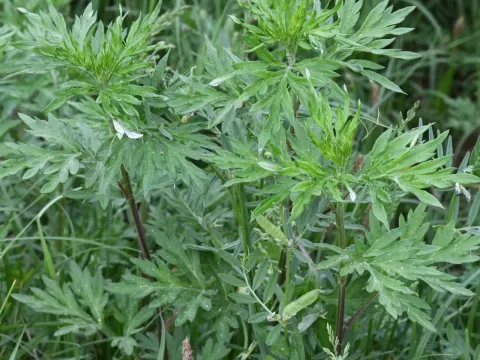
Verlot's mugwort
Artemisia verlotiorum
Verlot's mugwort (Artemisia verlotiorum) is a perennial herbaceous plant belonging to the Asteraceae family. It is known for its creeping rhizomes, which allow it to propagate rapidly and form dense stands in suitable environments.
What the section contains
Verlot's mugwort
Although it can act as a weed, its industrial value has led to the development of specific cultivation practices. It is often found in temperate regions and is well-adapted to various soil types.
Planting typically involves the division of rhizomes during the early spring season. This method ensures a high success rate for establishment and rapid development of the root system.
Row spacing is usually set between 45 and 70 centimeters depending on the intensity of the crop and the intended final use, whether it is for foliage biomass or seed production.
The initial planting depth should be approximately 5 to 10 centimeters to allow the plant to establish deep enough to resist early season drought while promoting vigorous shoot development.
This species thrives in sunny locations with well-drained, fertile soil. It is highly resilient and can handle various soil textures, but high organic content helps maximize biomass yields.
Water requirements are moderate. While the plant is drought-tolerant, supplemental irrigation during the peak growth months of summer significantly improves the volume of the harvest.
It prefers a slightly neutral to alkaline pH level. On extremely acidic soils, the plant may show reduced growth and lower concentration of active secondary metabolites.
The crop requires regular weeding between rows, especially in the first year of establishment. Once established, the density of the plant often helps to naturally shade out competing weeds.
Temperature range is quite broad, but optimal development occurs in warm climates where summer sunshine facilitates the synthesis of essential oils and terpenes in the leaves.
The primary use of Verlot's mugwort is in the pharmaceutical industry due to its diverse range of bioactive compounds, which are used in anti-inflammatory and antiseptic preparations.
Its essential oils are also highly valued in the perfume and cosmetic industries, specifically for formulations that require intense, bitter, and green herbal profiles.
Yields of dry biomass can reach significant levels when managed as an intensive crop, providing farmers with a reliable harvest that can be repeated for several years from the same rootstock.
The plant also has applications in veterinary medicine and as a source for natural deterrents, leveraging its strong phytotoxicity against certain insects and pests.
Standardized harvest cycles allow for consistent output, making it an economically viable crop for farmers interested in diversifying into high-value specialty botanical markets.
Artemisia verlotiorum is naturally resistant to many pests due to its high concentration of bitter compounds. However, fungal diseases such as powdery mildew can occur in dense, humid plantings.
Rust diseases affecting the foliage are another concern, particularly in areas with high rainfall during the harvest season. Monitoring is key to maintaining high-quality produce.
Pest pressure from aphids is rarely damaging enough to require chemical intervention, as the plant's chemical profile acts as a natural deterrent to many common agricultural insects.
Cultural control remains the best strategy. This includes maintaining optimal plant spacing to promote airflow and ensuring that fields are properly drained to prevent soil-borne pathogens.
Any application of pesticides should be strictly avoided or limited to organic-approved substances, given that the plant is primarily harvested for therapeutic and aromatic use.
The harvest should take place during the full bloom stage. At this phenological point, the essential oil content in the leaves and flowering tops is at its peak concentration.
Mechanical harvesting is the preferred method for commercial plantations. Using forage harvesters allows for large areas to be processed quickly during the brief optimal harvest window.
Immediate processing is essential after cutting. The material must be transported to the drying facility quickly to prevent oxidation or loss of volatile aromatic compounds.
Controlled-temperature drying at 40-45 degrees Celsius is standard practice. This preserves the structural integrity of the plant material and ensures the stability of the extracted oils.
Finished goods are stored in climate-controlled warehouses. Proper packaging is necessary to prevent contamination and to maintain the specific aromatic profile required for industry use.