
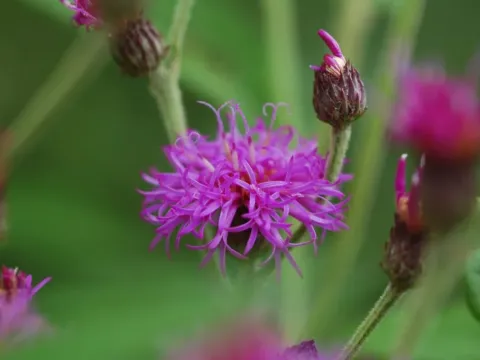
Vernonia hybrids
Vernonia hybrids
Vernonia hybrids, derived primarily from species like Vernonia galamensis, are thermophilic crops requiring warm soil conditions for optimal germination. Sowing should occur when temperatures consistently remain above 18-20 degrees Celsius, matching the onset of the rainy season in tropical environments.
What the section contains
Vernonia hybrids
Seeds are small and require shallow planting, typically at a depth of 1-2 centimeters. Achieving uniform planting depth is crucial for emergence, so precision planters are recommended to maintain consistent plant density across the field.
Row spacing is generally maintained at 50 to 70 centimeters to facilitate mechanical weed control and ensure proper aeration. The planting density must be optimized based on soil fertility to prevent nutrient competition among seedlings.
Preparing a clean seedbed free of perennial weeds is a prerequisite for success, as young Vernonia plants exhibit slow initial growth and are easily suppressed by faster-growing weed species.
For best results, use high-vigor, certified seed stocks. Proper seed preparation, such as moisture-controlled priming, can enhance the uniformity of emergence even under slightly fluctuating field temperatures.
Belonging to the Asteraceae family, Vernonia is highly drought-tolerant once established. It thrives in full sunlight; shading significantly reduces oil synthesis and overall seed yield, making site selection critical for maximizing profit.
The crop prefers well-drained, fertile loam soils. While it can adapt to various soil types, waterlogging is detrimental and must be avoided as it leads to root rot and poor stand establishment in early development stages.
Climatic adaptability is restricted to tropical and subtropical regions. The crop is highly sensitive to frost, which limits its commercial range to areas with extended frost-free periods and sufficient cumulative active temperatures.
Nutrient management should focus on phosphorus and potassium to promote robust root growth and high seed quality. Excessive nitrogen can lead to excessive vegetative growth at the expense of seed production.
Sustainable agrotechnology for Vernonia includes minimal tillage to preserve soil structure and moisture. Inter-row cultivation is beneficial, not just for weed management, but also for improving gas exchange in the root zone.
The primary economic value of Vernonia lies in its unique epoxy fatty acid, known as vernolic acid. This makes the oil a valuable feedstock for the industrial sector, particularly in the manufacture of high-quality paints, coatings, and plasticizers.
Commercial yields under intensive management typically range from 1.5 to 2.5 metric tons per hectare. Performance depends heavily on the specific genetic hybrid and the precise timing of irrigation relative to the flowering and grain-filling phases.
Oil content is a vital quality metric, with superior hybrids reaching 40-45% oil content. Proper management of micronutrients and water during the final reproductive phases can influence the final oil concentration in the harvested seeds.
Vernonia represents a promising alternative to traditional oilseeds, especially in arid or semi-arid regions where water-intensive crops often fail. It provides an efficient pathway to produce chemical intermediates with lower environmental impact.
Yield assessment is based on seed weight at standard moisture levels (8-10%). Efficient cleaning post-harvest is necessary to remove debris, ensuring the oil quality is not degraded by impurities during storage and shipping.
Fungal diseases, particularly root and stem rots, are the most common threats to Vernonia, especially in humid or poorly drained conditions. Crop rotation and the use of disease-resistant hybrids are the primary defensive strategies.
Insect pests, including aphids and pod-boring larvae, can significantly reduce yields. Integrated Pest Management (IPM) practices, emphasizing biological controls, are preferred to maintain the ecological balance of the field.
Fusarium wilt is a major pathogenic concern that can devastate standing crops. Avoiding fields previously planted with other members of the Asteraceae family helps in breaking the infection cycle of soil-borne pathogens.
Weed management remains the most significant challenge during the early growth phase. If left unchecked, weeds can outcompete the crop for resources, leading to severe yield reductions and complicated harvesting processes.
Seed moisture management is crucial in preventing mold development post-harvest. Storing seeds at high humidity promotes fungal growth, which can rapidly diminish the chemical value of the stored oils.
Harvesting timing is critical for Vernonia due to the high risk of seed shattering upon full maturity. Farmers must monitor the crop closely and begin harvesting as soon as seed heads turn brown and become brittle.
Direct combining is possible, but two-stage harvesting—swathing followed by threshing—is often preferred to ensure uniform drying. This method helps mitigate risks associated with uneven ripening across the field.
Threshing settings must be carefully calibrated to reduce rotor speed and cylinder clearance, preventing mechanical damage to the seeds. Gentle handling is necessary to maintain the integrity of the seeds and maximize high-quality oil recovery.
Immediate primary cleaning of the harvested material is essential to remove high-moisture trash that could cause heating in storage bins. Efficient airflow and ventilation are required to maintain seed quality during short-term storage.
Logistics for transport should involve dry, clean containers to prevent contamination. Because the oil from Vernonia has specialized industrial applications, maintaining purity and stability from the farm to the processor is of utmost importance.