
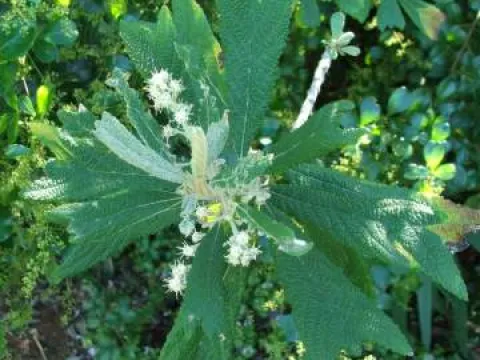
Tarconanthus trilobus
Tarconanthus trilobus
Tarconanthus trilobus is an evergreen shrub or small tree belonging to the Asteraceae family. It is widely recognized for its robust growth habit and its capacity to thrive in diverse environmental conditions typical of the African continent.
What the section contains
Tarconanthus trilobus
The plant originates from Southern and Eastern Africa, where it inhabits dry bushlands and rocky slopes. It is a heliophilous species, requiring full sunlight exposure to maintain healthy leaf development and oil production.
Regarding soil requirements, it prefers well-drained, sandy, or rocky soils. It has a high tolerance for poor soil quality but requires sufficient depth for root penetration to ensure stability and water uptake.
Climate conditions are the most critical factor, as this species is not frost-tolerant. It performs best in regions where temperatures remain consistently above freezing, making it suitable for tropical and subtropical cultivation.
Watering should be managed carefully to avoid waterlogging. Although the plant is drought-resistant, occasional irrigation during prolonged dry spells significantly improves biomass production and foliage quality.
The primary economic use of Tarconanthus trilobus involves the extraction of essential oils from its aromatic leaves. Harvesting is performed by selective pruning of branches, which also serves to shape the plant.
The timber of this plant is valued for its durability and resistance to termites. It is frequently used for artisanal projects, tool handles, and fencing material in local agricultural communities.
In terms of landscaping, it serves as an excellent windbreak or screen. Its dense, silvery-green foliage provides both visual appeal and protection for more sensitive crops against wind damage.
Post-harvest processing includes air-drying the harvested material in a shaded area to preserve the integrity of the aromatic compounds before distillation or grinding.
While generally resistant, the plant can be affected by specific scale insects or mealybugs in stagnant air conditions. Regular monitoring and proper plant spacing are recommended to prevent pest outbreaks.