
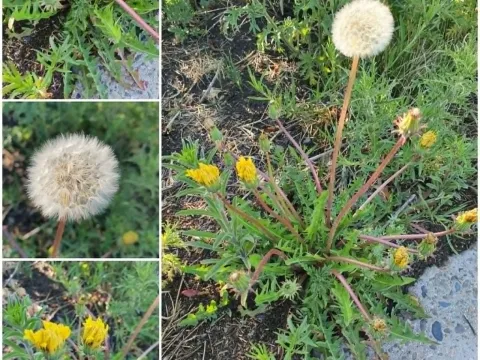
Horned dandelion
Taraxacum ceratophorum
The horned dandelion (Taraxacum ceratophorum) is a perennial herbaceous plant belonging to the Asteraceae family. It is distinct from common dandelion species due to its adaptation to arctic and alpine environments, displaying extreme cold tolerance.
What the section contains
Horned dandelion
For agricultural cultivation, the plant requires high solar exposure and open terrain. It is perfectly adapted to regions with short growing seasons, efficiently utilizing sunlight to develop its basal leaf rosette and robust root system within a limited timeframe.
Soil requirements focus on well-drained, nutrient-permeable substrates. While it can survive in poor soils, high productivity in a farming setting is achieved by maintaining adequate moisture levels without waterlogging, which can damage the taproot.
Agrotechnical practices involve careful site selection that mimics the plant's natural habitat. Ensuring proper aeration is crucial for the root development, as the horned dandelion performs best in loose, sandy or loamy soils with minimal compaction.
Botanically, the species is characterized by its horn-like appendages on the involucral bracts, which distinguishes it from related species. This biological trait is a key marker for taxonomic identification in field conditions.
Commercial utilization of the horned dandelion is primarily focused on the extraction of inulin and other biochemical compounds from the roots. Harvesting is scheduled based on the metabolic activity of the plant, typically before dormancy.
Mechanical harvesting of the roots is performed using specialized equipment designed for deep-root vegetables. It is essential to ensure that the roots remain intact during the digging process to preserve the structural integrity of the crop.
Post-harvest handling requires immediate washing and cleaning to remove all soil particles. Since the plant contains bioactive compounds, processing must include controlled drying to prevent nutrient degradation and microbial contamination.
Leaf harvesting is also conducted, often using high-precision mowing machinery. This component is used in the manufacturing of natural herbal supplements and high-value food additives that require specific botanical properties.
Quality management remains a priority during the harvest stage. Strict adherence to environmental standards ensures that the final product is free from contaminants, satisfying the requirements of both the pharmaceutical and food processing industries.