
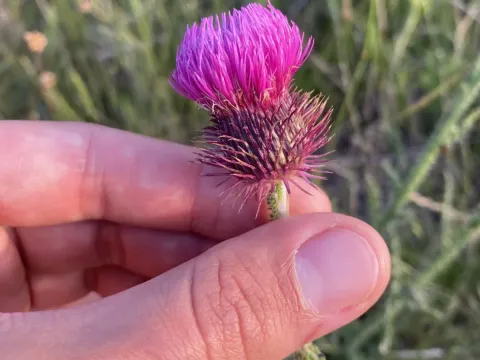
Hooked thistle
Carduus hamulosus
Hooked thistle (Carduus hamulosus) is a biennial flowering plant belonging to the Asteraceae family. It is widely recognized in agricultural practice as a robust weed that competes with crops for water, nutrients, and sunlight.
What the section contains
Hooked thistle
Seed germination typically occurs during spring when soil temperatures reach 8–12 degrees Celsius. The plant develops a dense basal rosette of leaves in its first year, establishing a deep taproot that makes removal difficult.
The optimal germination depth for seeds in the soil is 2–4 centimeters. Due to their lightweight structure, seeds can easily be dispersed by wind, allowing the plant to quickly colonize fallow land and cultivated fields.
Early-stage development is characterized by rapid root growth rather than aerial biomass. This biological strategy ensures the plant survives mechanical disturbances like harrowing in early spring.
To control the plant in agricultural settings, deep tillage is required after harvest. This action disrupts the root system and prevents the rosette stage from maturing into the second year of its life cycle.
The plant demonstrates high ecological plasticity, thriving in a variety of soil types ranging from sandy loams to heavy clays. It prefers well-drained, sunny environments and is rarely found in waterlogged or acidic soils.
Hooked thistle is exceptionally drought-tolerant. Its ability to extract moisture from deeper soil layers via a taproot allows it to survive periods of intense heat that often limit the growth of other crop species.
Soil pH preference is generally neutral to slightly alkaline. It is commonly found in disturbed sites, roadsides, and areas where natural vegetative cover has been reduced by human activity or grazing.
Adequate sunlight is the primary factor limiting its density. In dense crop stands, the plant struggles to develop its reproductive structures, often remaining in the rosette phase for extended periods.
Proper crop rotation is essential for managing this weed. Integrating cover crops that provide quick soil coverage can effectively outcompete thistle seedlings and suppress their establishment before they become dominant.
Several fungal diseases, such as powdery mildew and various rust fungi, act as natural enemies to the hooked thistle. These pathogens typically emerge during seasons with high humidity and fluctuating temperatures.
Insects are the most significant pests for this species. Species of curculionid weevils and thistle head moths (Cardui) frequently damage flower heads, significantly reducing the viability of seed production.
Aphid infestations are common during the bolting and flowering stages. By clustering on the stem and flower buds, they sap the plant's resources and often induce stunted growth or stem deformities.
Biological control agents are a promising area of research. By introducing specific insects that target thistle reproductive organs, agronomists can reduce the population density of the weed in pastures and marginal lands.
For intensive farming, chemical control via herbicides remains the most efficient method. Applying selective systemic herbicides during the early rosette phase ensures that the plant is eliminated before the stem elongates.