
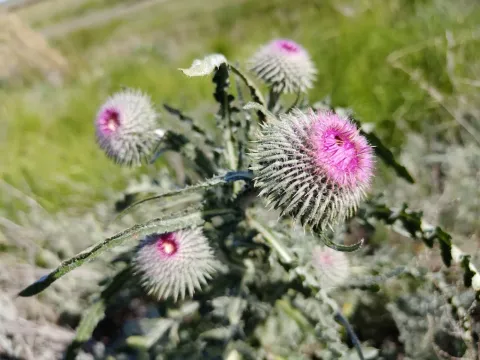
Hook-headed thistle
Carduus uncinatus
The Hook-headed thistle (Latin: Carduus uncinatus) is a herbaceous biennial plant belonging to the Asteraceae family. In agronomy, it is often classified as a wild species that competes with crops, particularly in pastures and uncultivated edges of agricultural fields.
What the section contains
Hook-headed thistle
The plant originates from regions with temperate climates, preferring open, sun-exposed habitats. Its geographical range extends across various mountainous and highland areas where the soil has sufficient drainage and exposure to direct sunlight for the majority of the day.
Botanically, it is characterized by its robust taproot and a tall, rigid stem protected by spines. The leaves are typically lobed and prickly, serving as a defense mechanism against herbivores, which allows the plant to survive in areas with heavy grazing pressure.
Climate and soil requirements for this species include well-drained, nutrient-rich soils, though it remains highly adaptable to poor substrates. It thrives in conditions where there is minimal competition from denser ground cover, allowing its taproot to reach deep into the soil profile.
Regarding its utility, the species is occasionally valued in apiculture due to its role as a honey plant. While it is rarely grown as a formal agricultural crop, its ecological role as a food source for pollinators is acknowledged in sustainable agricultural management plans.
Major pests affecting this thistle include various leaf-feeding beetles and weevils that can defoliate the plant during the early growth stages. Diseases, primarily fungal infections like rust and downy mildew, tend to manifest in areas with high humidity and poor ventilation.