
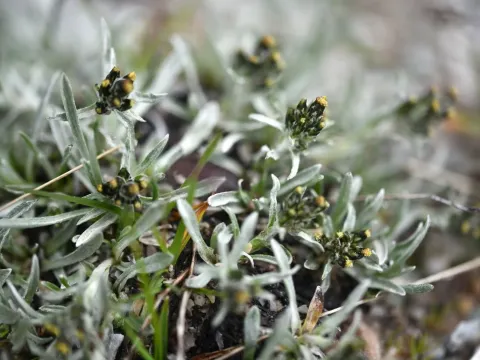
Hoppe's Cudweed
Gnaphalium hoppeanum
Sowing seeds of Hoppe's cudweed in a cultivation setting is recommended in early spring once the soil temperature reaches at least 10 degrees Celsius. In regions with harsh winters, seeds can be sown in late autumn into prepared beds, which provides natural stratification.
What the section contains
Hoppe's Cudweed
To ensure uniform germination, seeds should be scattered over the surface of moist soil without deep burial, as they require light to germinate. The planting area should be covered with agricultural fleece or plastic until the first seedlings emerge.
Seedlings of this crop exhibit slow initial growth. Therefore, it is critically important to keep the area free of weeds, which can easily overwhelm the young cudweed plants during the early stages of development.
The optimal plant density is determined by the goal of cultivation, whether for biomass production or seed harvesting. Standard sowing patterns involve rows spaced 30–45 centimeters apart, which allows for mechanical maintenance.
Once the basal leaf rosette is formed, the crop becomes more resilient to external stressors. During this phase, it is important to thin the plants, leaving at least 15–20 centimeters of space between them for full development of the aerial part.
Hoppe's cudweed is a member of the Asteraceae family that prefers open, sunny locations. The plant is well-adapted to mountain and foothill conditions, which dictates specific requirements regarding light exposure and humidity levels.
The crop has moderate soil requirements. The best growth is observed in light sandy or sandy-loam soils with excellent drainage, as excessive moisture and waterlogging are fatal to the plant's root system.
The plant shows high tolerance to drought periods and significant fluctuations between day and night temperatures. In intensive farming systems, it is necessary to maintain a neutral or slightly acidic soil pH.
Despite its low-maintenance nature, the crop responds positively to small applications of potassium fertilizers during the active growing season. Nitrogen fertilization should be limited, as an excess can reduce the concentration of active medicinal compounds.
Climatic requirements include a need for moderate moisture during the flowering phase. In hot summers, regular yet controlled irrigation is essential to prevent drying out of the root zone and premature wilting of the foliage.
The economic productivity of Hoppe's cudweed is measured by the yield of dried aerial biomass. Under proper agronomic conditions, herb yields can reach 15–20 decitonnes per hectare of dry raw material.
Peak yield indicators are achieved in the second year of vegetation when the plant fully develops its biomass and enters the active flowering phase. This period is when the concentration of beneficial flavonoids is at its highest.
Biomass harvesting is performed during full bloom, as the flower heads and the upper parts of the stems possess the greatest pharmacological value. Regrowth after mowing is generally slow, so usually, only one harvest per season is feasible.
To increase yields, annual mulching is recommended to help retain soil moisture and suppress weed growth. This is particularly important for plots with lighter soils prone to rapid drying.
A key factor influencing production output is the timing of the harvest. Delays lead to stem lignification and loss of raw material quality, which significantly lowers the market value according to industry standards.
The main threats to the crop are related to fungal diseases that thrive in high humidity. Root rot can occur when selecting sites with heavy, poorly aerated soils, which inhibit proper root respiration.
Pests like spider mites can infest the crops during dry years. Biological control methods are preferred over strong pesticides, as the plant is intended for medicinal use where chemical residue must be avoided.
Powdery mildew is a frequent issue on cudweed leaves during prolonged rainy spells. Timely thinning of the plants and ensuring good air circulation are the best preventive measures against this fungus.
Leaf-eating insects rarely cause critical damage, but if infestations reach high levels, they can reduce the total crop weight. Regular monitoring for pests should be conducted throughout the entire growing season.
To prevent the spread of infections, crop rotation must be strictly followed, ensuring the crop does not return to the same plot for at least 3–4 years. Removing harvest residues is also vital as they can harbor pathogens.
Harvesting Hoppe's cudweed is conducted either mechanically or manually during the phase of mass flowering. The top parts of the stems, about 20 centimeters long, are cut, leaving the root system intact for possible recovery.
After harvesting, the raw material requires immediate drying to preserve active ingredients. Drying should occur in the shade under canopies or in well-ventilated rooms, spreading the herb in thin layers on shelves.
For commercial cultivation, forced-air drying cabinets are used, maintaining a temperature not exceeding 45 degrees Celsius. Overheating leads to the degradation of essential oils and loss of medicinal efficacy.
Dried raw material should maintain its natural color and characteristic aroma. The finished product is stored in paper bags or wooden boxes in dry, dark warehouses where temperature and humidity are kept stable.
The shelf life of properly dried and packaged cudweed material is up to three years. During this time, the product must be regularly inspected for moisture content and signs of warehouse pest damage.