
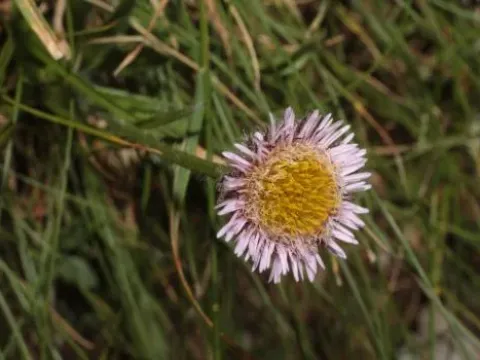
Hungarian fleabane
Erigeron hungaricus
Hungarian fleabane (Erigeron hungaricus) is a perennial herbaceous plant belonging to the Asteraceae family. It is a specialized species native to the Central European region, particularly found in calcareous habitats and rocky terrains.
What the section contains
Hungarian fleabane
The plant thrives in well-drained, nutrient-poor, but mineral-rich soils. It exhibits a high level of adaptation to drought, making it an excellent choice for xeriscaping or rock garden environments where water availability is limited.
Regarding climate, this species prefers locations with high solar exposure. It requires full sunlight to maintain a compact growth habit and produce an abundance of its characteristic daisy-like flowers throughout the season.
Agricultural management is relatively simple, requiring minimal fertilization and pruning. The main requirement for successful cultivation is maintaining soil neutrality and avoiding excessive moisture in the root zone during dormant periods.
The primary use of Erigeron hungaricus is in landscaping and botanical research. Its resilience and aesthetic appeal make it a valuable asset for maintaining biodiversity in cultivated spaces and creating sustainable planting schemes.
Pathogenic fungi represent the most significant threat to the health of the plant, especially in regions with high atmospheric humidity. Powdery mildew can affect the leaves if air circulation around the plant is insufficient.
Pests such as aphids and spider mites are frequent invaders during hot and dry spells. These pests can significantly impact the visual quality of the flowers and stems if the infestation is not addressed promptly.
Proactive management of these threats involves maintaining proper planting density to prevent overcrowding. Ensuring that the soil structure remains loose and well-aerated is critical for preventing root-related infections.
Integrated pest management strategies, such as introducing natural predators or using mild organic treatments, are recommended for controlling pest outbreaks without harming the local environment.
Regular inspections are necessary during the flowering phase to ensure that pests do not compromise the longevity of the blooms. Proper sanitation practices, including removing dead foliage, remain the best defense against long-term disease buildup.