
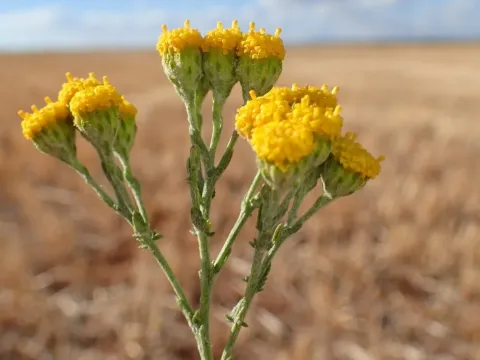
Tanacetum microphyllum
Tanacetum microphyllum
Tanacetum microphyllum is a perennial herbaceous plant belonging to the Asteraceae family. In agricultural practice, seeds are typically sown in the spring when soil temperatures reach 10–12 degrees Celsius, as the culture is sensitive to severe frosts during the initial development phase.
What the section contains
Tanacetum microphyllum
To ensure uniform emergence, row planting with spacing of 45-60 centimeters is preferred. Seeds should be sown at a shallow depth of 1-2 centimeters because they are light-sensitive and require optimal moisture contact to successfully germinate.
In regions with long growing seasons, late autumn sowing is also permitted. This allows seeds to undergo natural stratification, facilitating earlier and more consistent seedling emergence during the following spring.
The plant exhibits slow development during its first year, focusing primarily on building a basal rosette of leaves. It is crucial to maintain weed-free conditions during this critical establishment phase, as Tanacetum microphyllum is a poor competitor against fast-growing weeds.
For commercial cultivation, precision seed drills are recommended to optimize plant density. The standard seeding rate is determined by seed viability and a target density of 8-10 plants per linear meter of the row.
Originating from arid and semi-arid Mediterranean zones, this plant is highly demanding of sunlight. Open, sun-exposed plots without shading are essential for the proper synthesis of essential oils and other active compounds.
Tanacetum microphyllum prefers light, well-drained sandy or sandy-loam soils. It absolutely does not tolerate waterlogging, which quickly leads to root rot and loss of plant stands within the field.
The crop is relatively indifferent to soil pH, thriving in a neutral to slightly alkaline environment. A pH range between 6.5 and 7.5 provides optimal nutrient availability from the soil solution.
While the plant is highly drought-tolerant once established, it requires regular irrigation during the early growth stages. Excessive nitrogen fertilization should be avoided as it promotes leafy biomass production at the expense of generative organs and oil quality.
Optimal growth occurs at temperatures between 20 and 25 degrees Celsius. While the crop can withstand brief cold snaps, prolonged periods of high humidity combined with cold temperatures often trigger fungal infections.
The economic value of Tanacetum microphyllum lies in its high concentration of biologically active compounds, including flavonoids and essential oils. Crop yield is directly dependent on soil fertility and the overall agronomic management.
On average, under proper cultivation protocols, one hectare can produce 3-5 tons of dry plant material. Peak productivity is generally observed during the second and third years of growth, once the bushes are fully established.
Harvesting should take place during the peak flowering phase, when the concentration of useful substances in the inflorescences is at its maximum. Harvesting must occur during dry weather to prevent moisture-induced damage during the post-harvest drying process.
Post-harvest processing involves air-drying in the shade or using specialized dryers at temperatures not exceeding 40 degrees Celsius. Exceeding this temperature limit causes significant loss of volatile essential oil components.
Regular pruning of spent stems promotes better branching and prevents premature exhaustion of the plants. With proper maintenance, a plantation can remain productive for 5 to 7 years.
The primary pests affecting this culture include sucking insects such as aphids and spider mites. These pests damage young shoots and leaves, leading to stunted plant growth and a significant reduction in the quality of the harvested material.
Among fungal pathogens, root rot is the most dangerous, particularly in fields with poor drainage or excessive soil moisture. In dense stands, powdery mildew is also frequently observed, characterized by a white, flour-like coating on leaf surfaces.
Pest management relies primarily on biological control methods, including the introduction of natural predators or the use of eco-friendly biological preparations. Heavy pesticide use is discouraged due to the plant's end-use in pharmaceuticals and cosmetics.
Disease prevention is best achieved through strict crop rotation and by avoiding overcrowding in the field. It is important to wait at least 4-5 years before re-planting the same area with this crop.
Timely weeding and soil aeration are crucial not only for plant vitality but also for reducing the local disease pressure. Healthy, well-nourished plants exhibit natural immunity against most common species-specific pathogens.