
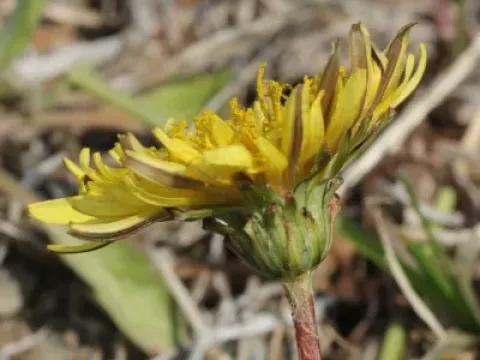
Taraxacum longeappendiculatum
Taraxacum longeappendiculatum
Taraxacum longeappendiculatum is a perennial herbaceous plant belonging to the Asteraceae family. In agriculture, it is valued for its potential as a source of inulin and various bioactive compounds used in the pharmaceutical and food industries.
What the section contains
Taraxacum longeappendiculatum
Sowing is typically performed in early spring once the soil temperature consistently reaches 5–10 degrees Celsius. The seeds require a finely prepared, firm seedbed to ensure optimal contact with the soil and uniform germination.
Late autumn sowing is also a viable strategy, allowing the seeds to undergo natural stratification during the winter. This practice often results in more vigorous spring emergence compared to spring sowing.
The optimal seeding rate and spacing are crucial for plant development. Rows should be spaced 30 to 45 centimeters apart to allow for proper light penetration and mechanical weed management between rows.
Given the slow initial growth rate of dandelion seedlings, early weed control is critical. Growers often use mechanical inter-row cultivation to keep the plantation free from competing weeds during the first weeks.
This crop thrives in well-drained, fertile loam soils. While it is adaptable to various soil types, it performs best in soils with high organic matter content and a neutral to slightly acidic pH level.
Light availability is a major factor in productivity. As a sun-loving plant, it requires full exposure to sunlight to maximize the synthesis of inulin and secondary metabolites within its taproot system.
The plant is highly resistant to cold weather, making it suitable for temperate climate zones. However, adequate moisture levels must be maintained, especially during the early growth stages and dry summer months.
Poorly drained or waterlogged soils are detrimental to the crop, as they often lead to root rot and other fungal pathogens. Proper site selection and drainage management are essential for a successful harvest.
While nitrogen fertilizers can boost leaf production, they should be applied cautiously. Excessive nitrogen can lead to succulent roots with lower dry matter content and lower concentrations of desired active compounds.
Yield components in Taraxacum longeappendiculatum are largely determined by root mass and density of planting. The accumulation of root biomass peaks toward the end of the second or third growing season.
Under optimal agronomic conditions, growers can expect dry root yields ranging from 1.5 to 2.5 tonnes per hectare. Yield consistency is dependent on maintaining healthy plant populations per unit area.
Leaf harvesting can provide an additional revenue stream, although it must be balanced against the plant's overall energy stores. Over-harvesting leaves can stunt root development significantly.
Soil nutrient status should be monitored annually. Balanced fertilization programs that include phosphorus and potassium contribute to better root structure and resilience against environmental stress.
Harvest scheduling is key to maximizing the yield of chemical compounds. Regular field sampling allows agronomists to determine the precise timing when the concentration of inulin in the roots reaches its maximum value.
Powdery mildew is the most common fungal disease affecting the foliage of the plant. It appears as a white, dusty layer on leaves, which reduces the plant's ability to perform photosynthesis effectively.
Rust diseases can also manifest, particularly in fields with high humidity and poor airflow. Managing plant density and ensuring adequate spacing are vital strategies to mitigate the spread of these pathogens.
Aphids represent the primary insect pest, feeding on the succulent plant sap and potentially transmitting viral diseases. Integrated pest management, including biological controls, is preferred over chemical interventions.
Root rots caused by soil-borne pathogens are usually associated with saturated soil conditions. Improving soil structure and avoiding excessive irrigation are the primary preventive measures.
- Implement strict crop rotation schedules.
- Use certified disease-free planting material.
- Remove infected plants immediately upon detection.
- Maintain adequate drainage in all cultivation areas.
- Monitor for pest pressure during the late spring season.
Harvesting usually takes place in late autumn when the plant enters its dormant stage. At this point, the nutrients have translocated from the leaves to the roots, maximizing the quality of the raw material.
Mechanical harvesters, such as modified potato diggers, are used to lift the roots from the soil. The machinery should be calibrated to reach a depth that captures the entire taproot without excessive breakage.
Post-harvest processing involves washing the roots in running water to remove all soil particles, followed by the removal of the crown and small lateral roots to ensure purity of the product.
Drying is a critical step that must be performed in controlled environments to prevent the degradation of heat-sensitive compounds. Air circulation and controlled temperature between 40 and 50 degrees Celsius are essential.
The final dried product should be packaged in breathable material and stored in cool, dark warehouses to maintain its quality and potency for pharmaceutical or food production purposes.